If I asked you to describe Japanese beer what would your response be? Many people would mention something about crisp, dry lagers, as exemplified by beers like Asahi Super Dry. You wouldn’t be wrong, Asahi Super Dry is the most popular beer in Japan. It relies on the additions of rice and corn and a proprietary strain of yeast to produce a highly attenuated beer that drinks crisp and finishes with a clean, dry finish. Spend a few days walking around in the hot, humid Japanese summer and you’ll start to understand it’s appeal. The neutral flavor is also popular because it doesn’t overwhelm the subtle flavors that you often encounter in Japanese cuisine. However, after spending two months in Japan I’m happy to report that there’s more to Japanese beer culture than rice lagers. Below are five observations I’ve made while exploring the land of the rising sun.
Observation #1 – Not all mass market Japanese lagers use adjunct grains. After its introduction in 1987, Asahi Super Dry became immensely popular and the other big breweries tried to follow suit. This led to a period referred to as the “dry wars”, but the copycats were in general not very successful. Nowadays, Sapporo Black Label is the only other flagship macro beer that uses rice. Kirin Ichiban, Suntory Premium Malts, and Yesibu are all-malt beers.
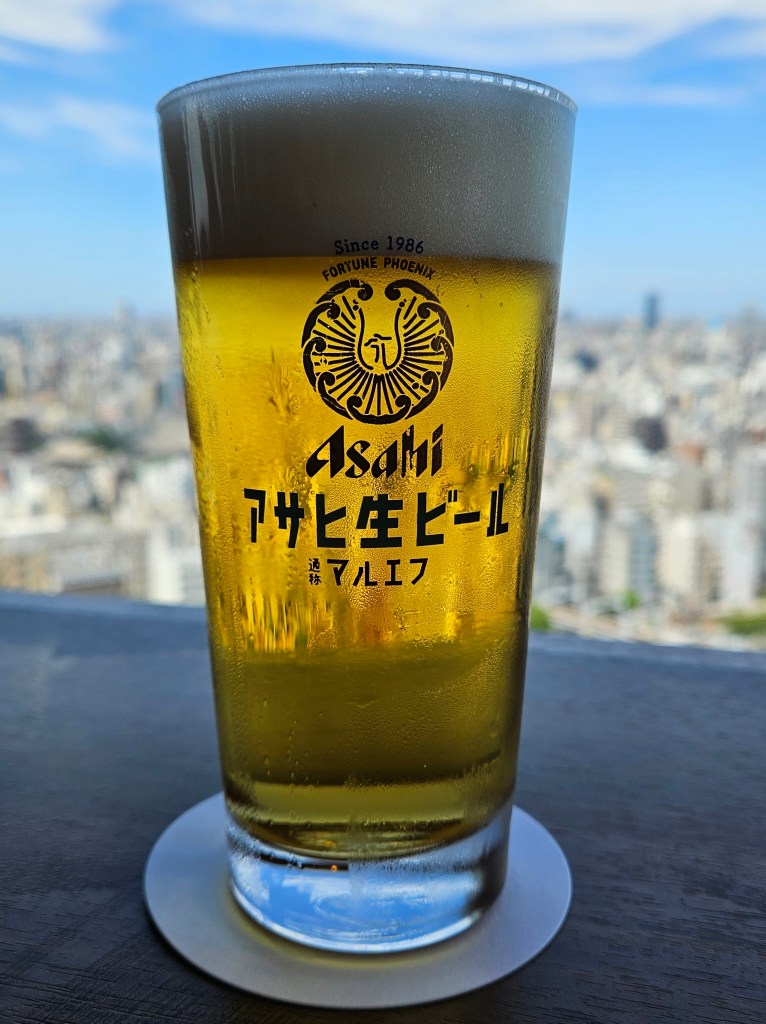
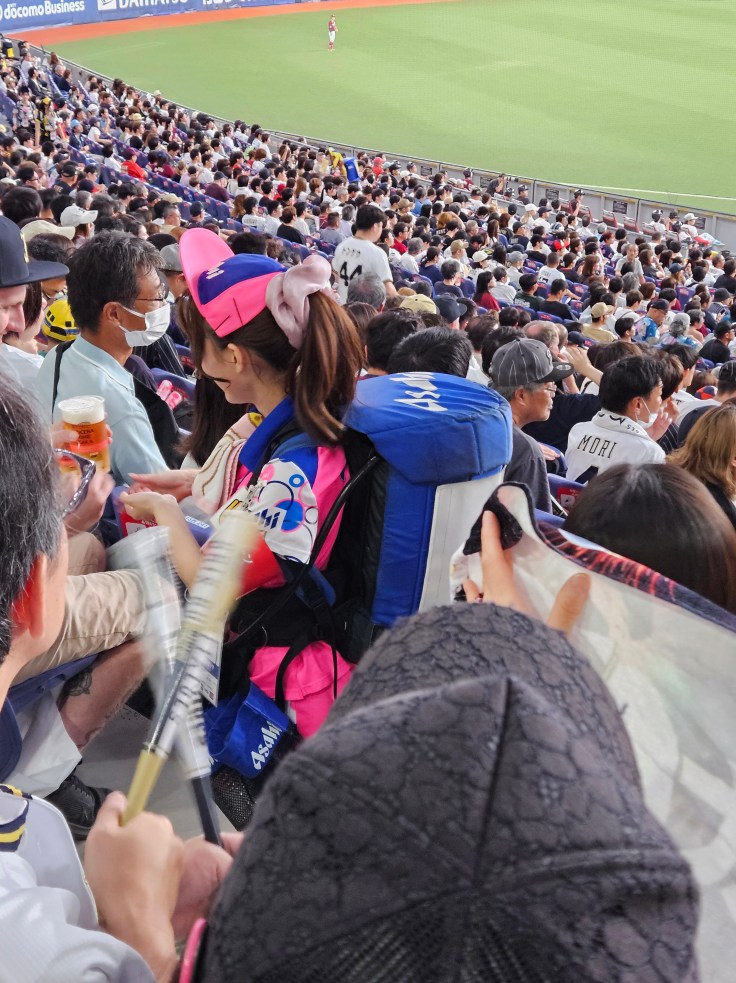
Observation #2 – Draft beer and proper pouring technique is a big deal in Japan. It’s hard to overstate the ubiquity of draft beer or “namu biru” in Japan. Cozy counter restaurants with only enough seating for a dozen patrons are equipped with a compact system for pouring draft beer. At baseball games, young female vendors walk up and down the aisles carrying small kegs of beer on their back, serving up draft beer to thirsty fans.
Not only is draft the preferred way of serving beer in Japan, the details of the pour matter. Whether you are taking in a baseball game, enjoying small plates of food at an izakaya, or sipping a saison at a craft brewery you can expect to get a glass of beer topped with creamy white head. The preferred ratio is 70% beer and 30% foam. At some venues you can choose from different styles of pour. For example, the Tsuboichi pour starts by building up a thick, dense head and can take up to five minutes to complete. It’s not hard to draw parallels to the famous Guinness pour (by the way when you come across an Irish pub in Japan you can expect a properly poured pint). More typically the glass is filled about 2/3 of the way and then by throttling down on the rate of pour the server will pour straight foam from the tap to reach the desired level of head. A well-executed pour may involve spilling beer down the sides of the glass to hit the perfect 7:3 ratio, removing any head that extends above the top rim with a knife or a spoon, and dunking the glass in a bucket of water to clean off the excess beer.
Just to be clear, Japanese Macro Lagers taste significantly better on draft.
Observation #3 – Craft breweries were basically non-existent before the mid-1990s and are still relatively niche compared to the US, Canada, the UK, or Australia. An internet search suggests there are on the order of 600–700 craft breweries in Japan. On a per capita basis that’s about 1 brewery for every 200,000 people, roughly ten times less than the state of Ohio where I live. While the consolidation and homogeneity of the beer industry in the late 20th century was similar to the US in the 1970s and 1980s, the licensing laws were not friendly to small scale brewers. Prior to 1994 breweries had to produce 2,000,000 liters (roughly 17,000 US bbl or 34,000 full-sized kegs) of beer per year to get a license. Even today some regulatory hurdles still exist. For example, homebrewing is still technically illegal in Japan.
Another difference between the two countries is the fact that prior to the rise of craft breweries there were effectively no small-scale artisans producing alcohol in many parts of the US. The same cannot be said for Japan, where small and medium sized sake breweries are found throughout the country. In that sense the artisanal alcohol vacuum in the US was more expansive than it was in Japan.
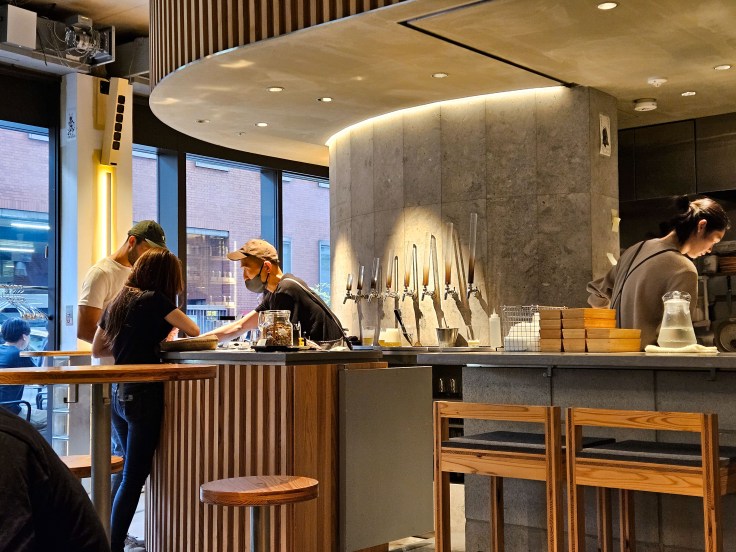
Observation #4 – Craft breweries in Japan tend to have a very different vibe from US/UK craft breweries. I’m generalizing here, but a lot of western craft breweries have a feel is a little rough around the edges. There is a DIY ethic and it’s not hard to find a taproom that resembles someone’s garage or man cave. Some breweries even consider themselves punks (though in my opinion it’s not possible to be punk and a multinational corporation at the same time). In the US, beer branding can be irreverent and beer names based on puns are common. If you come across that kind of vibe in a Japanese brewery, chances are it was started by a foreigner. Japanese craft breweries are usually clean, refined spaces. Expect a lot of white, accented with touches of hardwood, and seats that you wouldn’t describe as comfy (if there are seats at all). Some are elegant, some are chic, some are minimalist, but I’ve yet to find one that I would call haphazard or industrial. The service is almost always good and aside from the language barrier I’m always made to feel welcome when I visit a Japanese craft brewery.
It’s also unusual, but not unheard of, to find craft breweries in Japan that specialize in a specific style of beer. Japanese breweries tend to be generalists (much like US breweries were in the 90s and 00s). Most breweries offer about a half dozen beers spanning a range of styles. There’s usually an IPA or two, a pale ale, a lager or a kölsch, a dark beer, and often a wheat beer (both weizen and wit are common). Much to my delight, “clean” Belgian styles are relatively popular in Japan. Saisons and witbiers are way more common here than they are in the US, quite possibly more common than they are in Belgium.
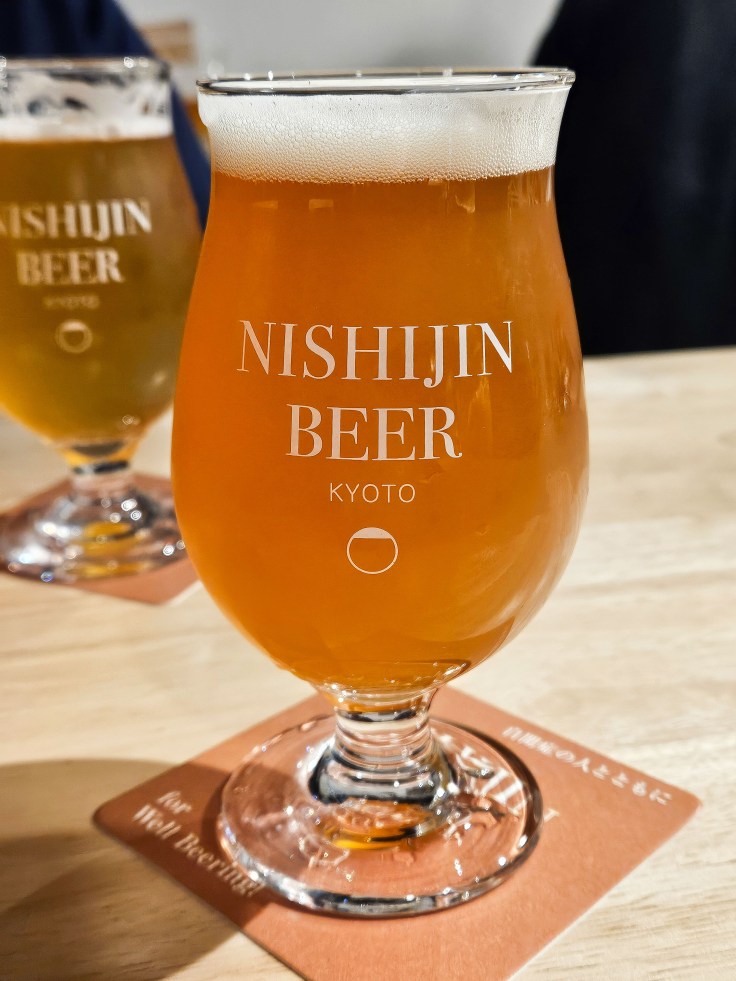
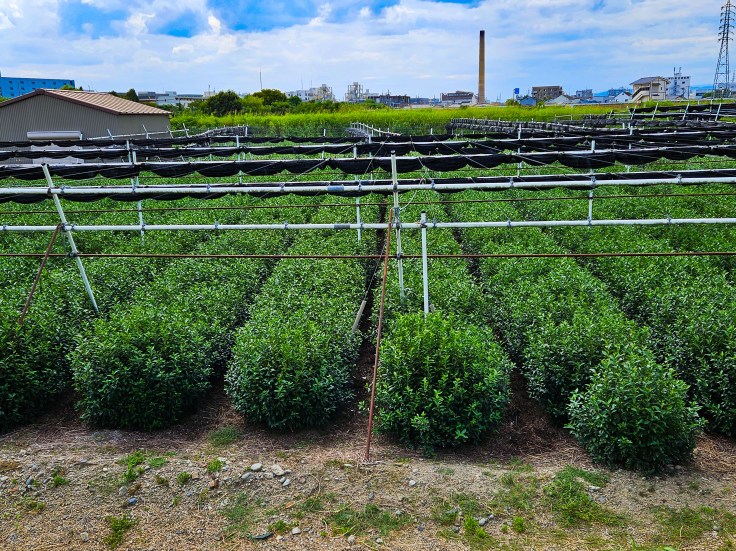
Observation #5 – Japanese brewers are not hesitant to use fruits, spices, and other non-standard ingredients, but the goal is to produce a balanced beer where the adjunct is subtle and well integrated. Often the adjunct ingredient might have a special tie to the region in which the brewery is located. For example, Hiroshima is known for oysters and lemons, and while visiting I came across an oyster stout and a lemon ale in each of the three breweries I visited. The Kyoto region is known for tea, and several breweries in this area make beers featuring different kinds of tea (this is not limited to Kyoto). I’ve come across beers featuring tea styles ranging from matcha to hojicha to earl grey and tea adjacent additions like jasmine, chamomile and lavender. Distinctively Japanese ingredients like sansho peppers, ume plums, and yuzu are also popular.
I could go on, but that gives you a sense of how beer is made, served and consumed here in Japan. With the table set, look for a series of posts about my Japanese travels with an emphasis on the beer, sprinkled with an outsider’s observations on the sights, history, and culture of Japan.
Other Posts in the Japan Beer Travels Series
 Pat's Pints
Leave a comment