Japan’s ancient capital, Kyoto, is rightfully on the itinerary of most foreigners who visit Japan. The city is steeped in history, religion, and traditional Japanese culture. It was the spiritual and sometimes political center of Japan from the 8th century, when Emperor Kammu moved the capital from Nara to Kyoto, until the 19th century when the young Emperor Meiji left for Edo (now Tokyo). For a city with a population of just 1.5 million, Kyoto has witnessed an inordinate number of important historical events and is home to a seemingly endless number of significant Buddhist temples and Shinto shrines. It could take you a week just to visit all 17 of the UNESCO World Heritage sites in and around Kyoto. Every spring cherry trees fleetingly envelop the city in a blanket of pink. In the autumn, crimson maples and yellow ginkgos burst into a riot of color that must be seen to be believed. The gardens of Kyoto, many established centuries ago, have been meticulously cultivated and tweaked to showcase the best that each season has to offer.
In contrast, the history of brewing beer in Kyoto only extends back to the middle of the last decade. One might say it’s still in its infancy, and for that very reason a visit to Kyoto feels a little like time travel to someone who experienced the growth and maturation in the US of what we now call craft beer. Kyoto is a place where you can still find amber ales, pale ales, and Irish stouts. A place where you can visit every brewery in the city in a single weekend. A place where wheat beers rule and Belgian-style beers are still cool. Good luck finding that combination anywhere in the US.
I’m fresh off a 3+ month sabbatical living in Uji, just 20 minutes by train from central Kyoto. During that time I did my best to explore all the culture, history, food, and beer that I could take in. Three months might sound like a long time, but in many ways I only managed to scratch the surface. At the same time, I recognize what a privilege it was to spend three months in this beautiful and historic city, when most visitors only have a few days. Hopefully, my thoughts and recommendations in this post and the ones that follow will be of use to those planning a future visit or reliving a past visit.
I realize that almost no one travels all the way to Kyoto for the beer, though if that’s your thing (and it could well be if you are reading this blog) I think you’ll be pleasantly surprised at what you can find with a little bit of effort. So, in a series of three posts I’m going to suggest itineraries that involve pairing visits to breweries with nearby temples and/or shrines. Since Kyoto attracts more than 50 million visitors each year(!!), where possible I’m going to focus on temples that are not in the top tier of everyone’s list. You know the ones I mean, Fushimi Inari, Kiyamizu-dera, Kinkaku-ji, Ginkaku-ji, Ryoan-ji, and the Arashiyama area. Those places, while amazing, tend to be very crowded, and while you might still get that killer photo, the hordes of people jostling for the same photo do tend to detract from the experience of visiting a place intended to be sacred. I’m not trying to talk you out of visiting those sites, but at the same time I do think you will find it rewarding to experience places that while not quite as popular are still phenomenal.
In this first post we’ll explore the southern neighborhoods of Kyoto. The maps below give you a context of the places I’ll be discussing. Note that photo galleries are interspersed throughout the article, and I encourage you scroll through the photos to get a better sense of the places I’m describing.


Kyoto Brewing Company and To-ji Temple
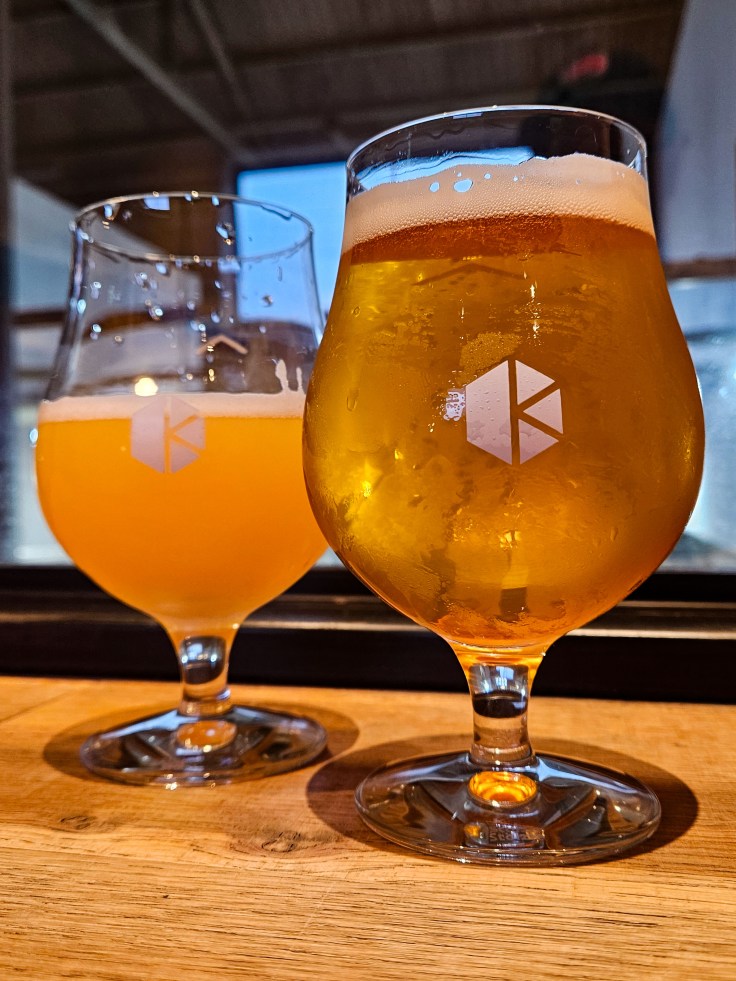
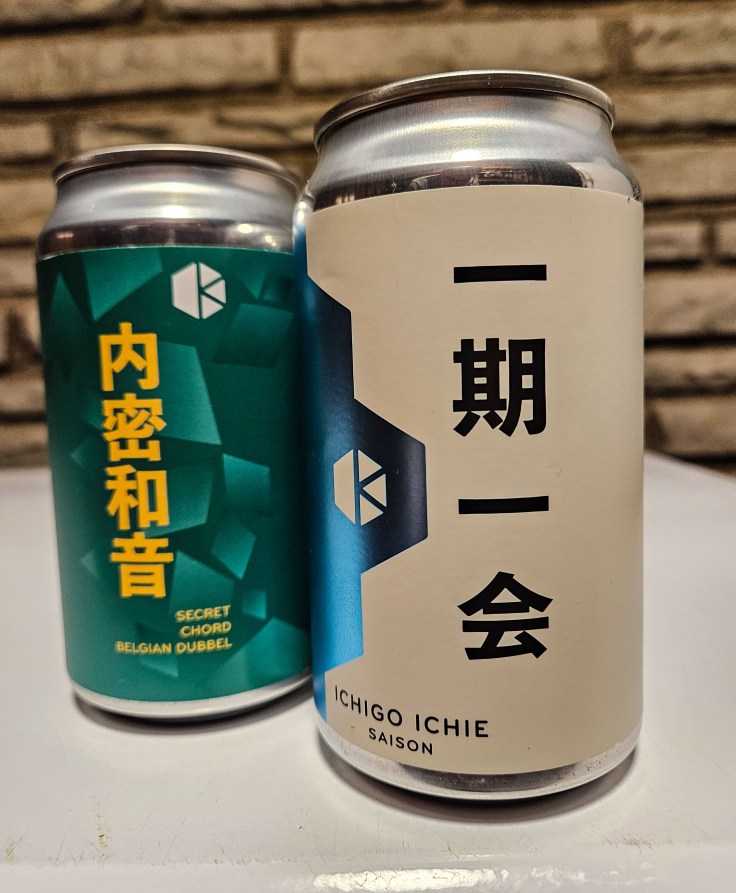
Your entry point into Kyoto is likely to be Kyoto Station, which lies in the southern part of the city. South Kyoto also happens to be home to Kyoto Brewing Company, the largest and oldest craft brewery in the city. It was founded in 2015 by a trio of western expats – Paul Speed from Canada, Ben Falck from the UK, and Chris Hainge from the US. Perhaps because they couldn’t agree on whose home country makes the best beer, or maybe just because they had good taste, KBC elected to specialize in Belgian-style beers. As far as I can ascertain they are the first and still one of the only Japanese breweries to use a Belgian yeast strain as their house strain, specifically the Wyeast Belgian Ardennes strain which traces its roots back to Brasserie d’Achouffe. I often use that strain in my home brewing and I can see why they chose it. It adds peppery spice and fruity esters at a goldilocks level and flocculates better than most Belgian yeast strains.
Early on in my stay I picked up a can of KBC beer brewed with sake yeast. I later learned this beer is not representative of the range of beers at KBC, but at the time I wasn’t that impressed, so I didn’t visit the taproom for several weeks after arriving. The fact that the taproom is only open Friday (5–9 pm), Saturday (12–6 pm), and Sunday (12–6 pm) also played a role in my delayed gratification. When I did finally visit, I was impressed to find 10 beers on tap, roughly half of which were Belgian-style beers. There were two saisons, a Belgian IPA, a dark strong, and a tripel. They also make a variety of modern IPAs and do them very well. After sampling several beers, including a 13% barleywine as the finale, I was in good spirits by the time I left.
Kyoto Brewing Company is located in a relatively quiet neighborhood. The only tourists coming here are beer lovers. They don’t serve food at the taproom and there are no televisions or entertainment, just beer and merchandise. Drinks are served on the first floor, which doesn’t have any seating and somewhat minimal areas for standing. There is a medium-sized room for sipping your beers in a second floor room that overlooks the brewing area. Alternatively, you can sit outside in the parking lot, under a tent. The Delerium café this is not. On both visits we enjoyed our beers on the second floor, which has an ambiance not far removed from a public library. Most of the patrons enjoy their beer in silence or hushed conversation and there are a variety of books and magazines about beer that you can peruse while sipping your pint. Despite the subdued ambiance, the beer is very good. Amongst the best beer I had while in Japan.
While KBC is not located in a neighborhood that attracts many tourists there are several nearby stops worth visiting. It’s only a 10 to 15 minute walk to the To-ji Temple, one of Kyoto’s UNESCO World Heritage Sites. In fact, the bus that takes you to Kyoto Brewing Company goes right past the temple’s five story wooden pagoda, the tallest in Japan. When the city was established To-ji was built just east of the Rashomon (or Rajomon) Gate, the grand southern entrance to the city. The location just outside of the city limits was chosen by the emperor to limit unwanted interference by the church in affairs of state. The Rashomon Gate is no more, reduced to a historic marker in a playground and now remembered primarily as the title of Akira Kurosawa’s 1950 film about a murder that is described in contradictory ways by four different eyewitnesses (the unreliability of eyewitnesses has since become known as the Rashomon effect), but To-ji Temple still stands.
During the spring and fall they light up the gardens and temple buildings at night and open their doors to visitors (for a nominal fee of course). An evening tour of To-ji makes for a nice combo with a late afternoon visit to Kyoto Brewing Company. I found the three-dimensional mandala located in the Kōdō (lecture hall) particularly interesting. In Buddhism a mandala is a sacred diagram representing the cosmos. It allows practitioners to visualize the Buddhist universe and the relationships between deities. Mandalas are usually two-dimensional drawings but the mandala at To-ji is a three-dimensional representation made up of sculptures. It consists of 21 deities from the Buddhist pantheon. Fifteen of the twenty-one statues are originals that are over 1200 years old! When the mandala was conceived, Japanese Buddhism was still relatively young, so many statues involve imagery from India. For example, the god Benzaiten is shown riding four geese and there’s bodhisattva riding an elephant. I didn’t see anything quite like it at any other temple I visited during my stay.
You can work up an appetite drinking beer and visiting temples. Fortunately, there are some interesting options in this part of town, both involving foreign cuisine the Japanese have assimilated and perfected. A block or so from KBC is a cake store called Atelier Kyō Baum that specializes in a German-style of cake called baumkuchen (literally tree cake). A Baumkuchen is a made up of thin layers that resemble the growth rings of a tree. Traditionally it is made by brushing thin layers of batter onto a rotating spit over a heat source. The Japanese have a much higher tech way to make these cakes, but end result is a cylindrical cake that contains a series of thin layers that make concentric rings. Some of this story is told in the Atelier Kyō Baum store which is part retail store, part cake musuem, and part cafe.
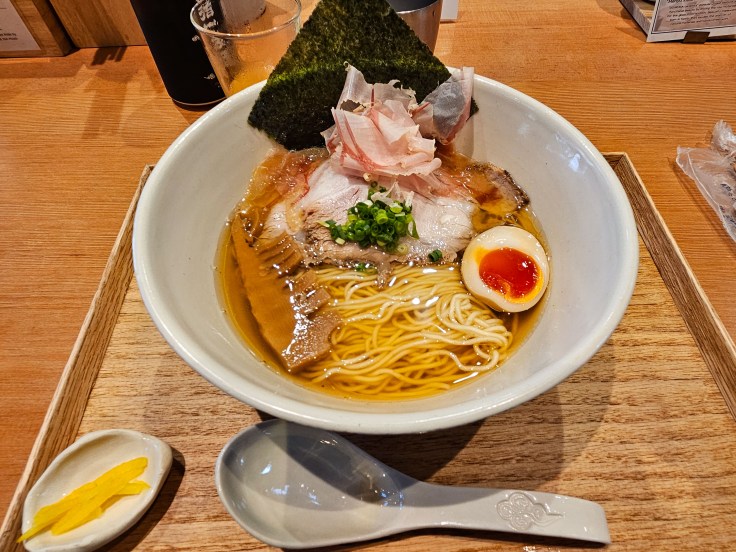
If you want something more substantial, I’d suggest a small restaurant called Mr. Gyoza. Gyozas are Japan’s take on a Chinese dumpling (jiaozi). A Japanese gyoza is fried crispy on the outside, with a mixture of meat (usually pork), garlic, and cabbage on the inside. When made well they are down right addictive. Mr. Gyoza has a counter that seats 8-10 people and a similar number at small tables. They also do a brisk carry out business with a walk-up window. They also serve ramen and karaage (boneless fried chicken), so this is a one stop shop for affordable Japanese street food. It makes for a very satisfying meal after a session of Belgian beers at KBC. The experience feels almost like it’s taken straight out of an episode of Anthony Bourdain’s Parts Unknown.


Kyoto Beer Lab and Tofuku-ji
Kyoto Beer Lab was founded in 2018 by three partners (Tom Ainsworth, Hiroki Yokoyama, and Hidekazu Muragishi). Though a few years younger than Kyoto Brewing Company, they are also a mainstay of the Kyoto beer scene. While in my opinion the beers here are not quite at the same level as KBC, the hours (1–10:30 pm every day) and location near the Shichijō stop of the Keihan line make it a more accessible option than KBC.
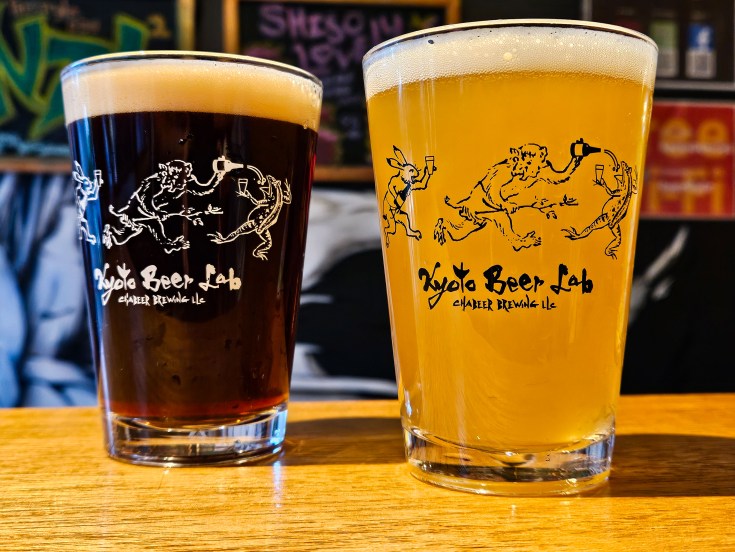
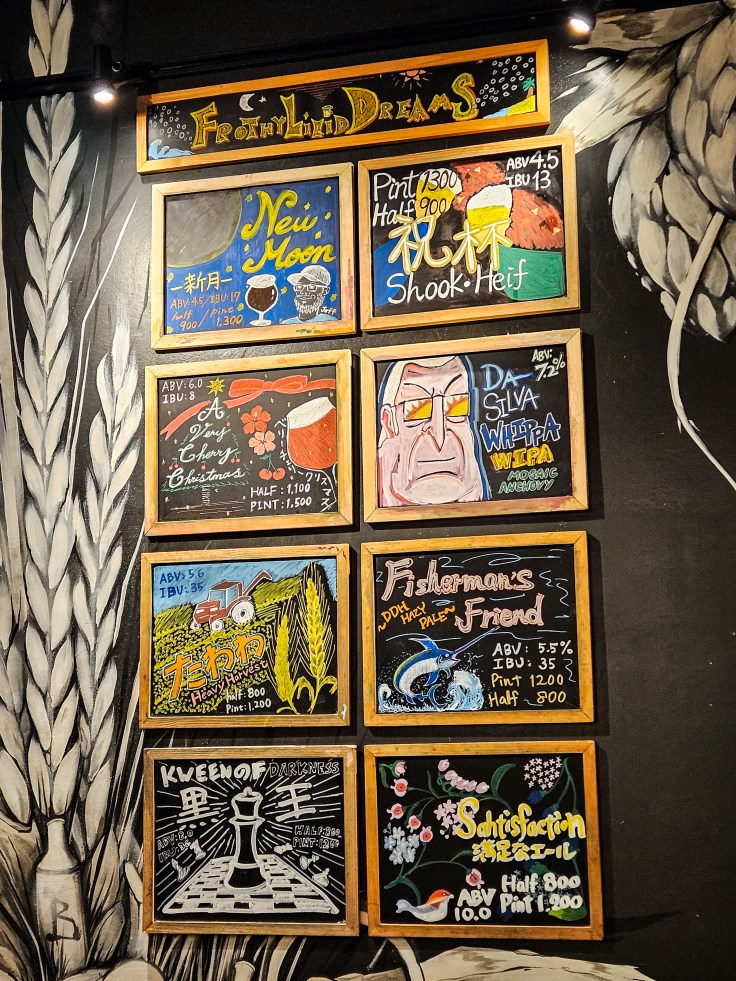
A lot of Japanese brewery taprooms go for a chic, clean, minimalist decor, but that’s not the case with Kyoto Beer Lab. The walls, bar, and small counter that runs around the outside of the cozy taproom are made from well worn wood. The 8-beer taplist is advertised on a hand drawn chalkboard with playful sketches accompanying each beer. Both times I visited there was a beer being served on cask, the only cask ale I encountered in Kyoto. There is a small patio with outdoor seating that looks out onto the relatively quiet backstreet with a canal running down the middle. Technically it’s the Takase River, but to my eye it looks more like a canal. The atmosphere here is convivial, not too different from a British pub. On both of my visits the clientele were a mix of Japanese and foreigners.
Based on an admittedly small sample size I didn’t detect any particular theme to the beer styles at Kyoto Brewing Lab. In addition to the cask ale, I enjoyed a hoppy, hazy weizen called Looking for New England, inspired by the Billy Bragg song of the same name, and a rich Baltic Porter called Queen of Darkness. Perhaps the most memorable beer from my visits was a hop-forward IPA called Fisherman’s Friend that featured anchovy hops. I had never heard of anchovy hops, but for the sake of research I felt I should see what they were all about. After all fish are a staple of the Japanese diet. My wife is both fond of IPAs and highly averse to fishy flavors. She was hesitant to try a drink, but after a few sips she confirmed that there was no aroma or flavor of fish in the beer. After a little digging online I learned that Anchovy is a new American hop with flavors that are described as watermelon candy and raspberry, with dank, citrusy, herbal notes. The brewers who sponsored the acreage named it anchovy because they likened the unexpected flavor combo as being akin to “hot pizza with anchovies”. None of that really makes sense to me, but the name does catch your attention.
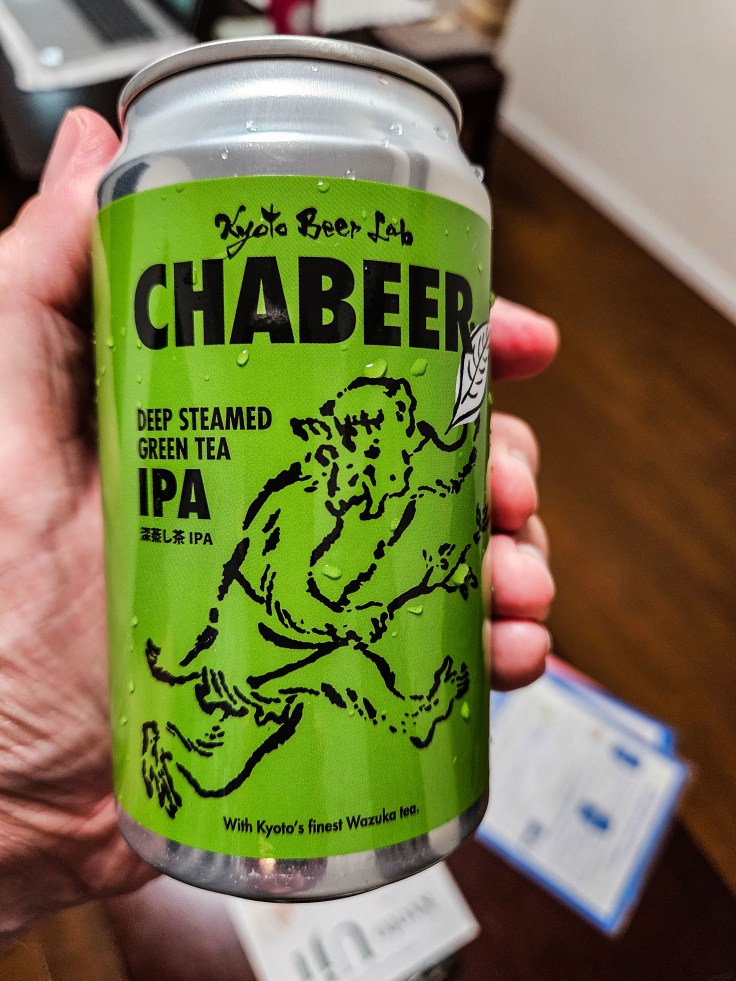
Kyoto Beer Lab is perhaps best known for their series of tea-beers (they alternatively refer to themselves as Chabeer Brewing). On both visits there were no tea beers on draft (or cask), but they did have cans of the three different tea beers they make – a stout, an IPA, and a white ale. On the first visit, I took home a can of the green tea IPA and I found the tea and the hop flavors to be surprisingly compatible. On my last visit I got a can of the white ale, per the recommendation of the bartender. I’m saving that for an All Things Beer podcast on tea beers, so keep tuned if that’s of interest.
Like most places in the city, Kyoto Beer Lab is located close to several notable temples and shrines. Sanjusangen-do is a popular temple that is within walking distance (15 min) of Kyoto Beer Lab. It’s famous for a very long wooden hall that contains 1001 statues of Kannon, the thousand-armed goddess of mercy. The temple also features statues of 28 guardian deities, including the wind god (Fūjin) and thunder god (Raijin), all masterpieces of Kamakura-period sculpture.
Kyoto Beer Lab might be the closest brewery to the iconic and immensely popular Kiyomizu-dera Temple, a temple complex set on a hill in the Higashiyama “mountains” overlooking the city. The complex is located at the source of a natural spring whose sacred waters are believed to grant health, longevity, and success. The large wooden balcony of the main hall at Kiyomizu-dera offers one of Kyoto’s most iconic vistas. However, for this brewery/temple pairing I’m choosing Tofuku-ji. This large compound was established in 1236 and is the head temple for the Rinzai Sect of Zen Buddhism. Unless you go in late autumn when a canyon filled with maple trees turns crimson, it’s generally not too busy. Conveniently, you can access Tofuku-ji from Kyoto Beer Lab by taking the Keihan Line south from Shichigo to the Tofuku-ji stop.
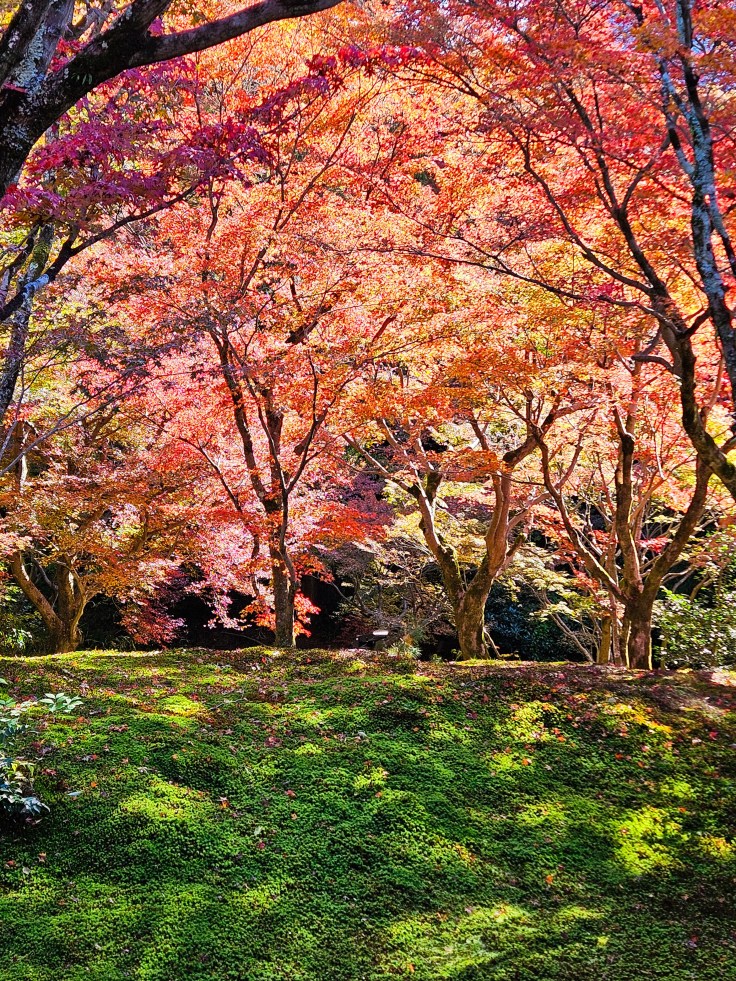
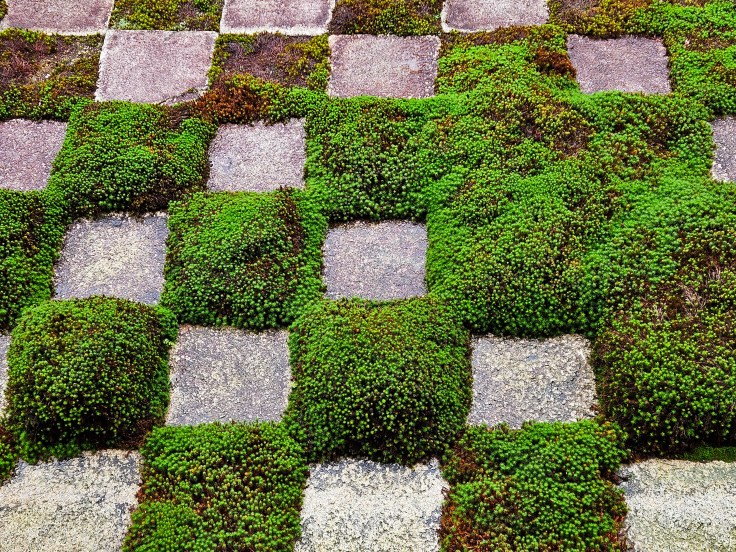
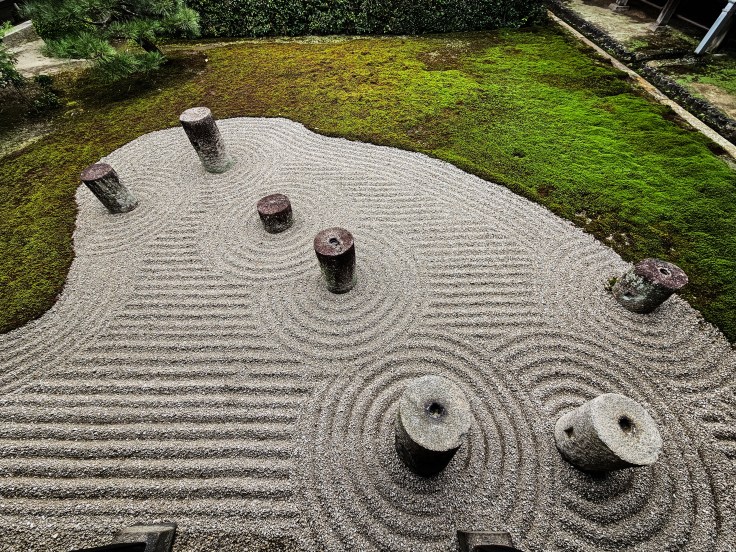
Tofuku-ji is probably best known (or at least most visited) for the brilliant scarlet maple trees that put on a stunning display in the autumn, but it’s far from a one trick pony. The massive Sanmon gate with an elaborate dragon painted on the ceiling is impressive. The abbot’s quarters are surrounded on all four sides by different takes on the Zen rock garden. The rock gardens include a traditional dry garden, a checkered moss garden, and a garden that represents the big dipper. Actually, I found the rock gardens here to more impressive than the better known garden at Ryoan-ji. There’s a small stream that cuts a canyon through the complex. When I visited in late November a slow-moving throng of people (myself included) followed a path that snaked around through the maples and over the Tsūten-kyō Covered Bridge. All the while gawking at and snapping photos of the autumn foliage. Despite the crowds, the fall colors make an impression that I will not soon forget.
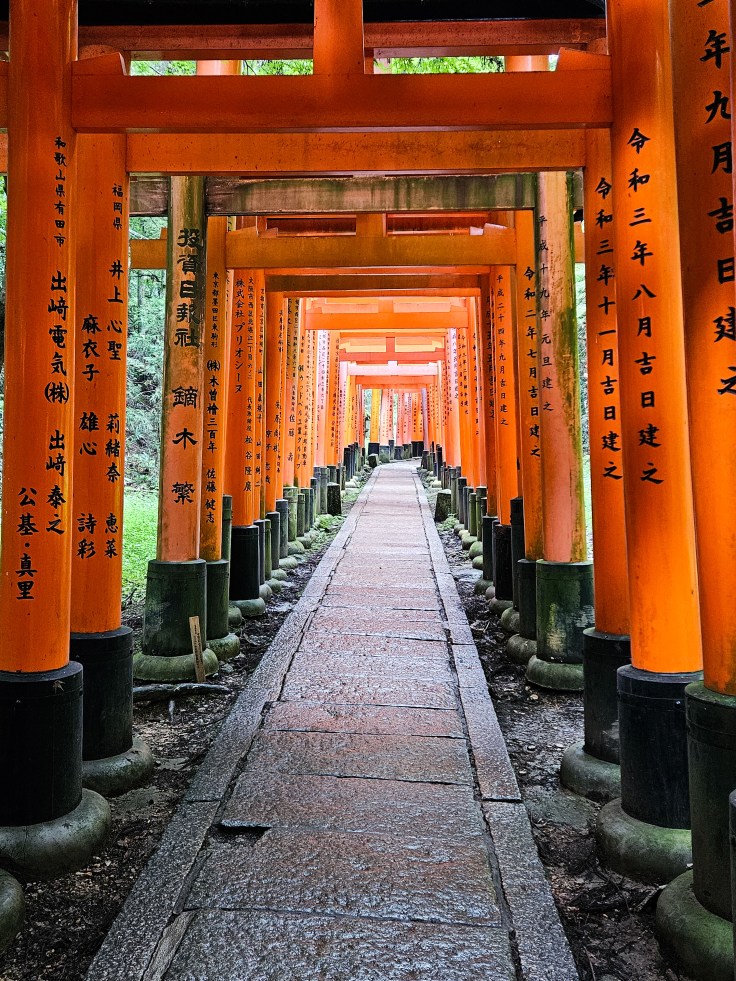
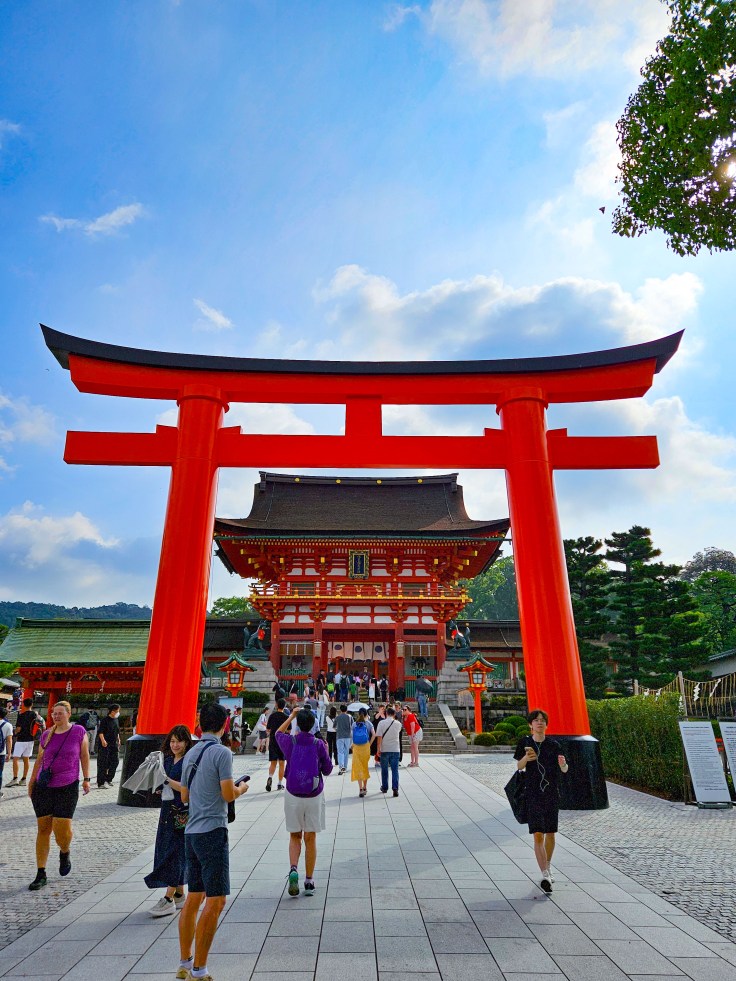
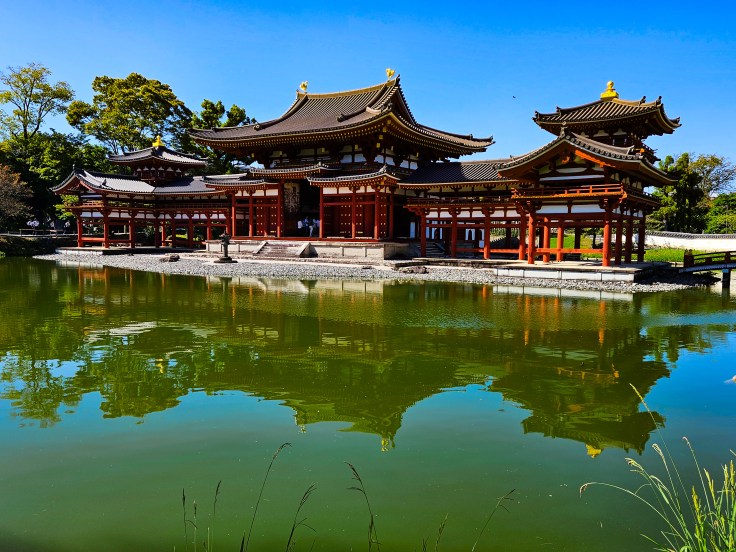
If you have the time and inclination for a day of visiting temples and shrines, I recommend you continue south on the JR Nara line. The next stop is right in front of the Fushimi Inari Taisha Shrine. This unique shrine features thousands upon thousands of vermillion torii gates tracing various paths up the mountain side. It is quite possibly Kyoto’s most popular shrine, in part because there is no admission fee and the complex is open 24 hours a day. If you get off at Rokujizo you can take the bus to Daigo-ji Temple. Another sprawling temple complex which features an exquisite garden commissioned by Hideyoshi Toyotomi (who unified Japan in the late 16th century) specifically for staging tea ceremonies while viewing the spring cherry blossoms. The pagoda at Daigo-ji was built in 951 and is the oldest surviving wooden structure in Kyoto. The small Bentendo Shrine is set at the base of a hill in front of a reflecting pond. It’s sufficiently picturesque that a photo of it graces the cover of my Japan travel book. Near the Bentendo shrine there is a traditional restaurant that serves a yuba (the skin taken off hot soy milk) and a tasty bowl of udon noodles. Further south in Uji, the green tea capital of Japan, is the impressive and distinctive Byodo-in Temple that appears on back of every 10 Yen coin.


Well this post is stretching on, so I will end it here. I’m planning on releasing two follow up posts. The next post will focus on three small breweries in the Nishijin neighborhood paired with some impressive Shinto shrines on the north side of Kyoto. The third and final post will examine busy central Kyoto with some beer options near popular destinations like Gion, Pontocho, and the Nishiki Market.
Other Posts in the Japan Beer Travels Series
 Pat's Pints
Leave a comment