In my travels around Japan I was impressed with the overall quality of the beer I found. However, the density of small breweries is nowhere near what you would find in the US and many other western countries. It’s hard to get an exact figure but the number of beer breweries in Japan is on the order of 600-800, which is not that many for a country of 120 million people. This raises a simple question, why aren’t there more craft breweries in Japan?
The question may be simple, but the answer is complex. Licensing laws and taxes are part of the answer. Until 1994 breweries had to produce 2,000,000 liters (roughly 17,000 US bbl or 34,000 full-sized kegs) of beer per year to get a license, which effectively shut the door to all but the biggest breweries. Even today an annual production of 60,000 liters (510 US bbl or 1020 kegs) is required. Then you have the fact that homebrewing is effectively illegal in Japan, which throttles a common path for would be brewer-entrepreneurs.
That’s not to say there are no small family run breweries in Japan, so in this second of three posts about craft beer in Kyoto we are going to turn a spotlight on three small breweries – Woodmill Brewery (est 2018), Nishijin Brewing (est 2017), and Bighand Bros. Brewing (est 2023). All three breweries are located in Nishijin, a neighborhood better known for kimonos than night life. These breweries are relatively close to one another and if you time your visit correctly (i.e. if you visit on a Saturday afternoon) you can take part in a Nishijin beer crawl, as I did. If you want to experience Kyoto off the beaten path this itinerary is right up your alley.
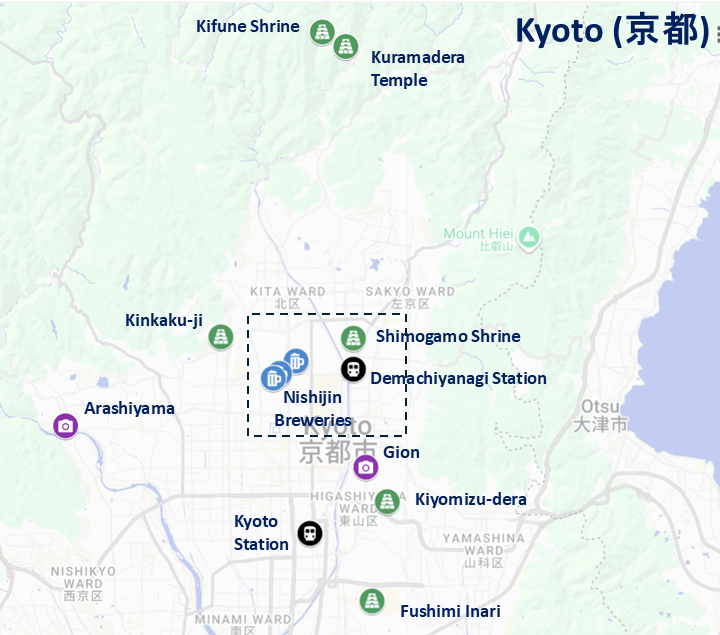
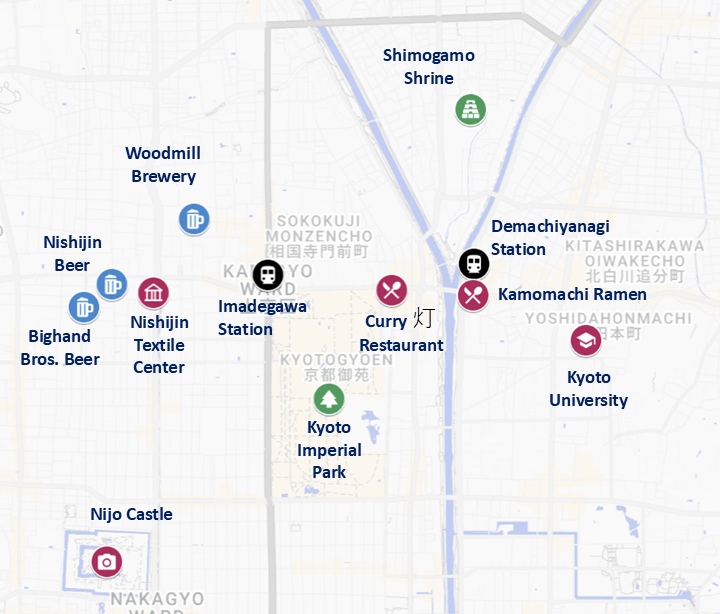
The maps below give you a context of the places I’ll be discussing. Note that photo galleries are interspersed throughout the article, and I encourage you scroll through the photos to get a better sense of the places I’m describing. If you missed it, be sure to check out my previous post about two of Kyoto’s largest and most established breweries – Kyoto Brewing Company and Kyoto Beer Lab.
Kuramadera Temple and Kifune Shrine
As I said in the first post, Kyoto is famous for many things, but beer is not one of them. It would be a pity to come to this city of Zen without taking time to visit a temple or two. In this post we are going to start by heading to the northern reaches of city, as far north as the train will take you, to visit a Buddhist temple complex built on a mountain and a nearby Shinto shrine.
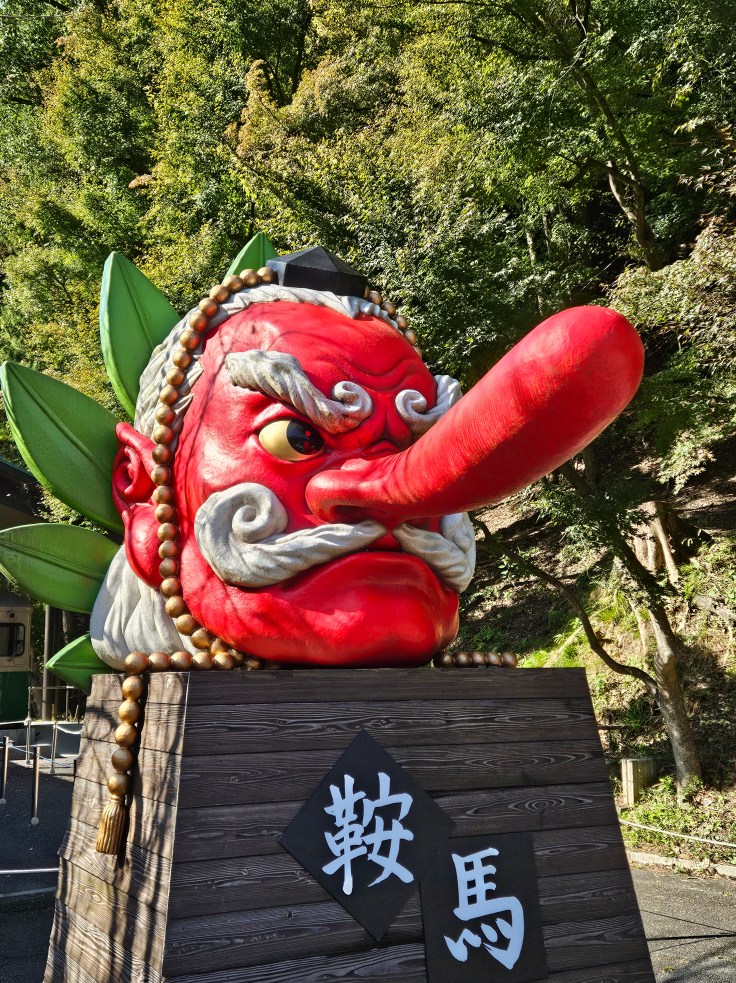
We woke up to a beautiful, mid-November autumn day, with temperatures forecast for the high 60’s and clear blue skies. After some coffee and a light breakfast, we walked from our apartment to the Obaku stop on the Keihan Line (near Uji). Eighty minutes later, after changing trains at Chusojima and Demachiyanagi, we arrived at the small village of Kurama. As you can see from the map above Kurama is quite far north (11 km or 30 minutes on the train north of Demachiyinagi Station). Legend has it that the mountains here are inhabited by mischievous, magical creatures called tengu. These supernatural beings are described as winged creatures, with a long nose, a red face and sharp claws. They are said to be well versed in the martial arts and skilled with a sword. You can think of a tengu as part fairy and part ninja, with a nose like Pinocchio. We didn’t spot any in the wild, which is perhaps just as well, but you can’t miss the bust of a tengu outside of Kurama Station.
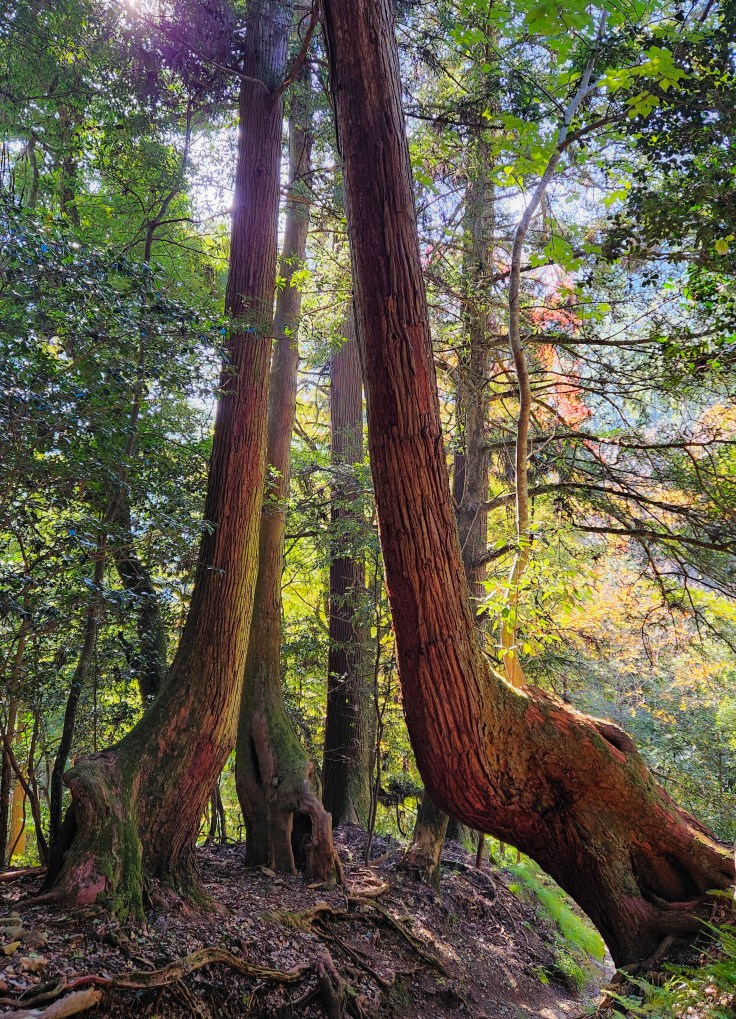
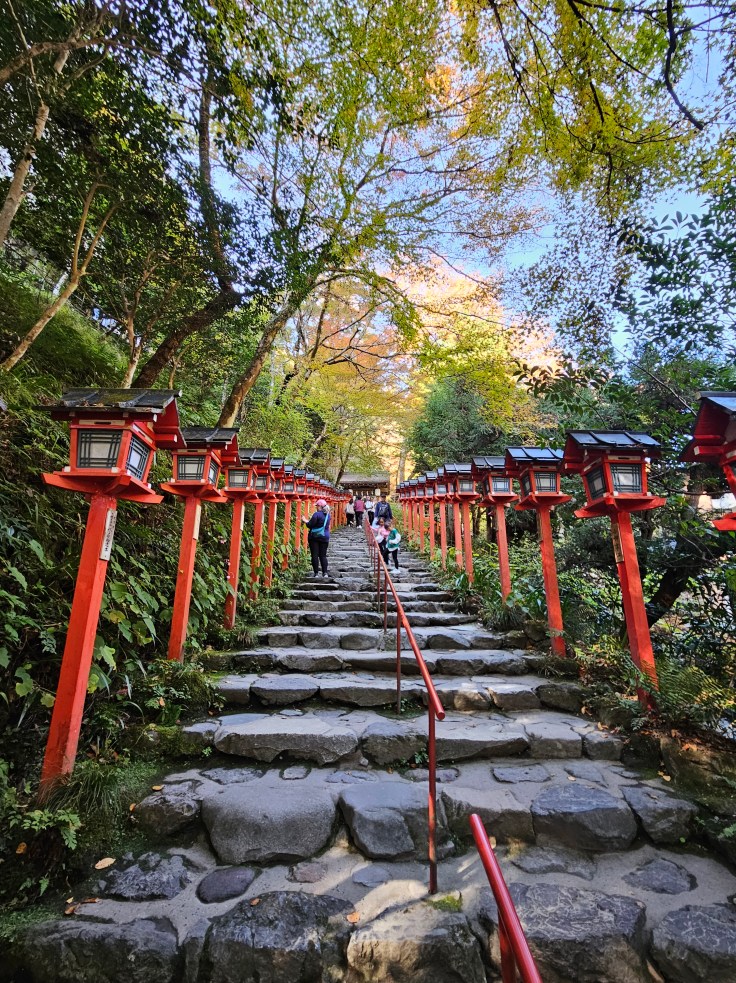
Our destination is Kuramadera Temple, a sprawling complex built on the slopes of Mount Kurama. The entrance gate is a short walk from the station. From there we hike up the mountain past towering cedar trees and various small buildings that make up the Yuki Shrine. If you’ve never been to Japan, it may seem odd that a Shinto Shrine is located within the confines of a Buddhist temple, but this is not at all unusual. From my perspective, the two religions seem to be completely intertwined. In fact, it’s not uncommon for Japanese people to turn to one religion or the other as they see fit for the occasion. The elevation gain is on the order of 1000 feet, which elicits some grumbling from my wife as we climb stair after stair. If walking up the side of a mountain is not your thing there is a cable car that will take you up to the main temple complex for a nominal fee, but that route does bypass a lot of interesting sights.
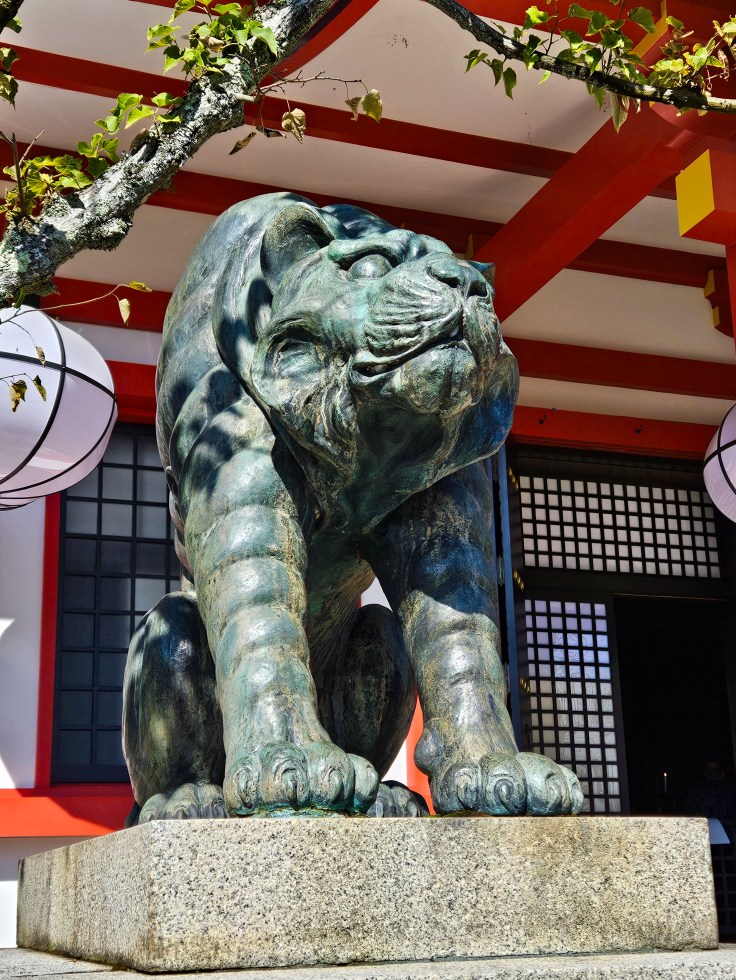
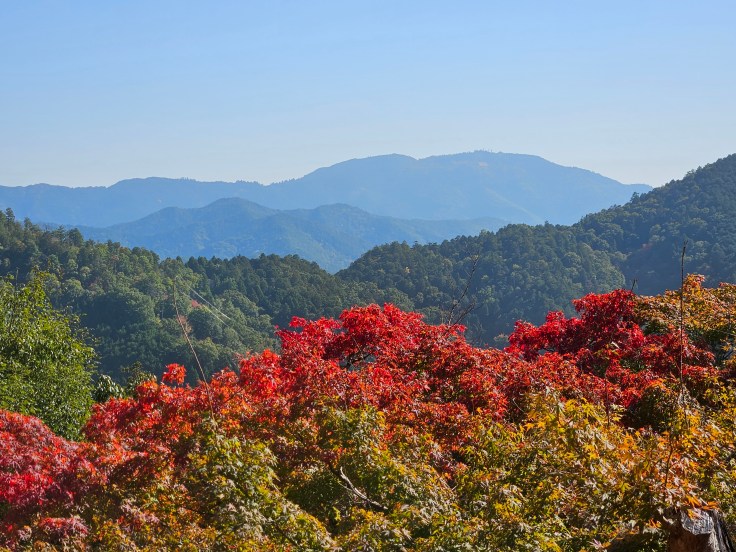
Eventually we come to the main temple complex. The main hall is flanked by two fierce tigers who serve as guardians here. Inside a trio of deities—Maōson, Bishamonten and Kannon—are worshiped. The courtyard features a “power spot”, marked by a six-pointed star that is said to concentrate the spiritual energy of the mountain. I cannot confirm the veracity of that claim, but I can say with absolute certainty that the courtyard offers a splendid view of the forested mountains that surround Kyoto.
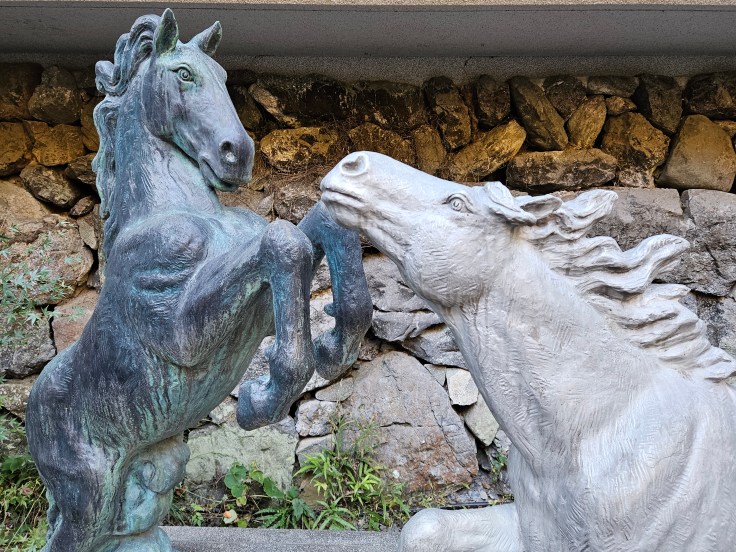
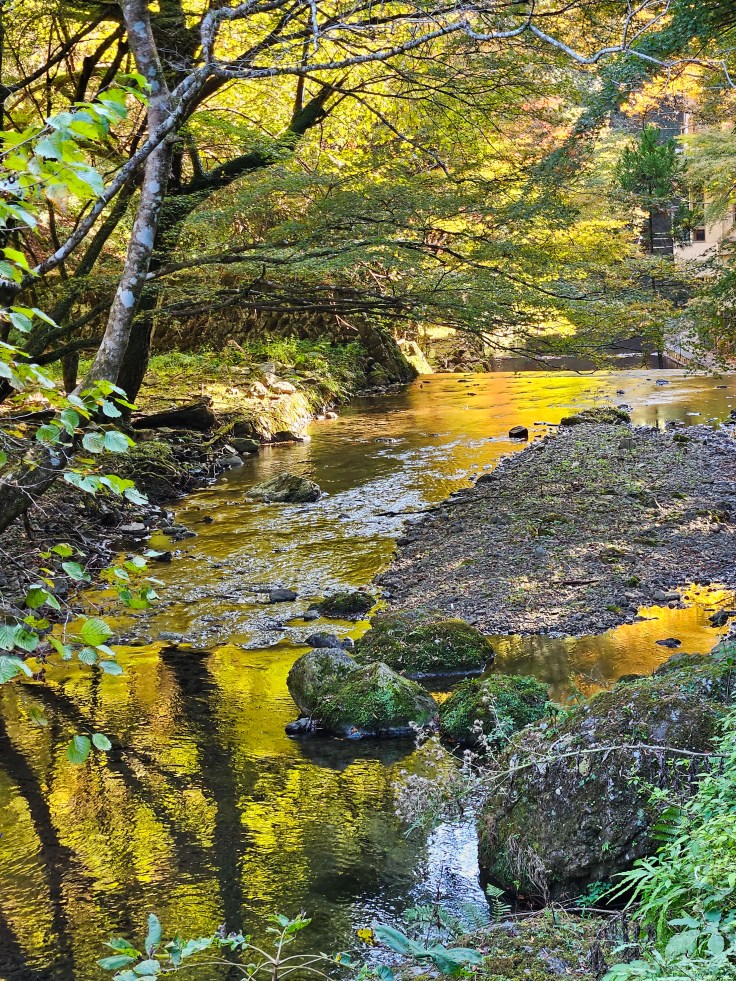
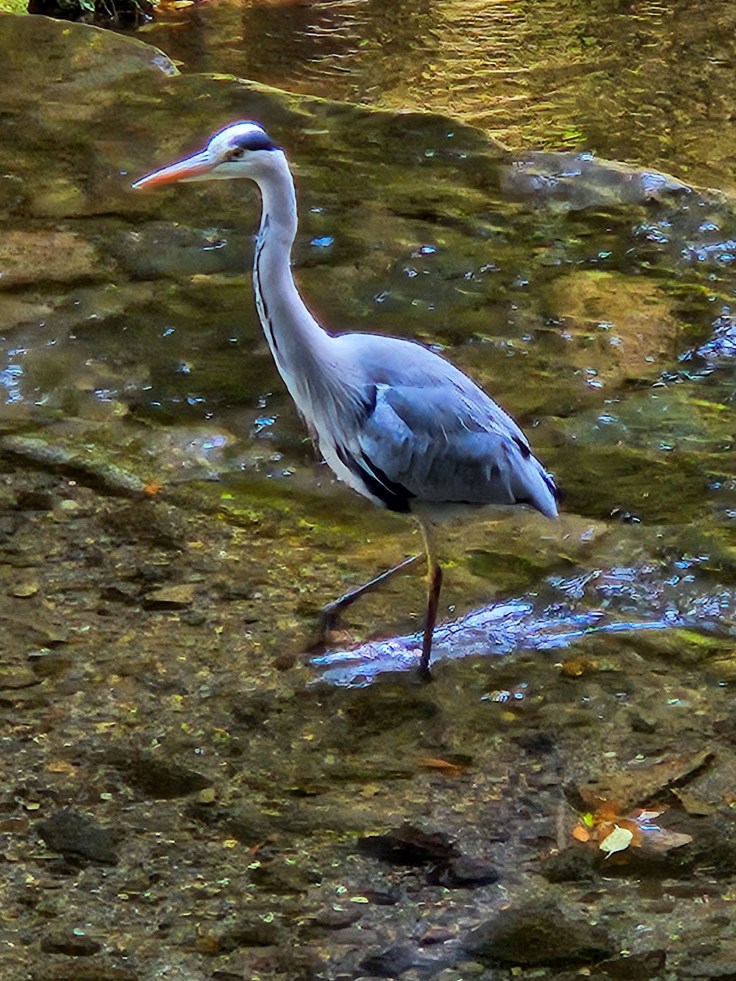
After taking in the area around main shrine and recovering our strength, we continue our hike by heading west. After crossing a saddle we follow a steep trail down the western side of the mountain to the village of Kibune. The main attraction here is the Kifune Shrine, a Shinto shrine dedicated to the gods of water and rain. In older days priests would come here to pray for rain in times of drought or dry weather when beset by floods. They would sacrifice either a black horse to summon rain or a white horse for sunny weather. Thankfully, ritual sacrifices are a thing of the past, but the ancient custom is commemorated by statues of the two horses. After enjoying a lunch that we packed before leaving the apartment, we continue our walk along the Kibune river valley. It’s a bucolic scene and the timing of our visit is perfect for a gorgeous display of autumn color. Respect for nature is a central principle of Shintoism, and this hike is a great way to experience that connection.

Nishijin – Craft Beer Town
To get back to Kyoto proper we take a bus to the Kibuneguchi stop, then the Eizan train to Demachiyanagi, and finally another bus to Nishijin where well-earned beer awaits us. You might find such a journey arduous, but I find it liberating that so much of Japan can be accessed using the public transit system. It’s also handy because drinking and driving laws in Japan are very strict.
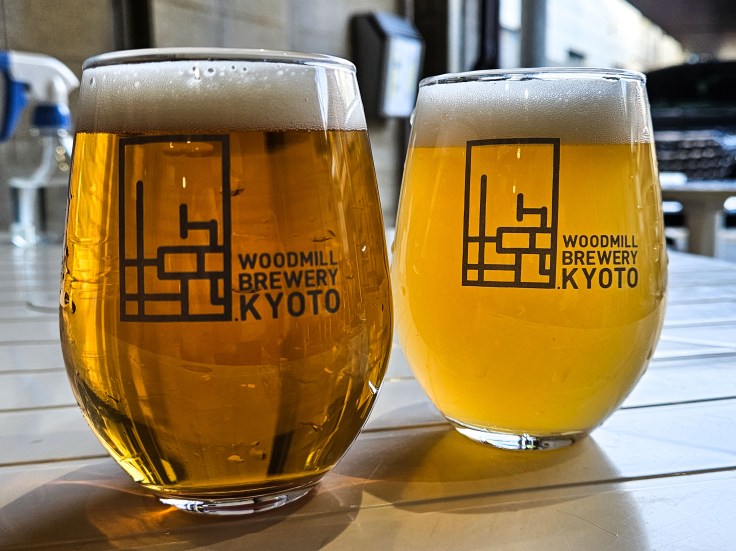
Our next stop is the Woodmill Brewery. I became aware of this brewery while perusing a magazine about Japanese Craft Beer while visiting Kyoto Brewing Company. The taproom is only open Saturdays and Sundays from 11 am to 5 pm, and on Fridays for takeaway sales, so it’s necessary to time your visit carefully (check their website for details). The location is smack dab in the middle of a residential neighborhood or at least that’s my impression. The brewing area and taps are in an enclosed area that feels like it could serve as a double car garage (though garages are rare in Japan and if you were to find one it would undoubtedly be smaller). Tables and chairs are set up on a concrete pad covered with a roof but at the same time open to the quiet street on which the brewery is located. It is the most casual brewery taproom I encountered during my entire 3-month stay in Japan. The vibe reminds me of small scale nanobreweries that were once common in the US, but increasingly hard to find these days.
Woodmill is a mom and pop operation. The beers are made by Yamato Tsujimoto, and his wife oversees the taproom. I order a glass of their most popular beer, a Belgian-style witbier made with Hassaku oranges and my wife orders the Honey Ale. Both are well made, not necessarily beers that etch themselves into your memory, but tasty nonetheless. While we are enjoying our beers Mrs. Tsujimoto comes over to our table and tells us about something called Nishijin Craft Beer Town, a kind of neighborhood ale trail. We have a nice conversation, which given our complete lack of Japanese language skills, is an unusual experience in and of itself. People have been friendly to us almost everywhere we’ve been in Japan, but the warmth of the welcome here is a cut above. My wife mentions that I’m a homebrewer and Tsujimoto-san tells us that homebrewing is illegal in Japan. When her husband decided he wanted to launch a brewery he first had to learn the trade by working at a sake brewery. That is in contrast to the US, where the vast majority of professional brewers started honing their craft at home.
Circling back to the Nisihijin ale trail, we are told that if we were to get three of five possible stamps we can earn a credit of ¥300 (about $2). We get one stamp for Woodmill and another for riding the bus (apparently Kyoto Public Transit is part of the promotion), so we only need one more stamp to earn the bonus. To turn our back on such a challenge would surely bring dishonor upon our family. So, we finish our beers and extend our day out by heading for the next stop, Nishijin Brewing.
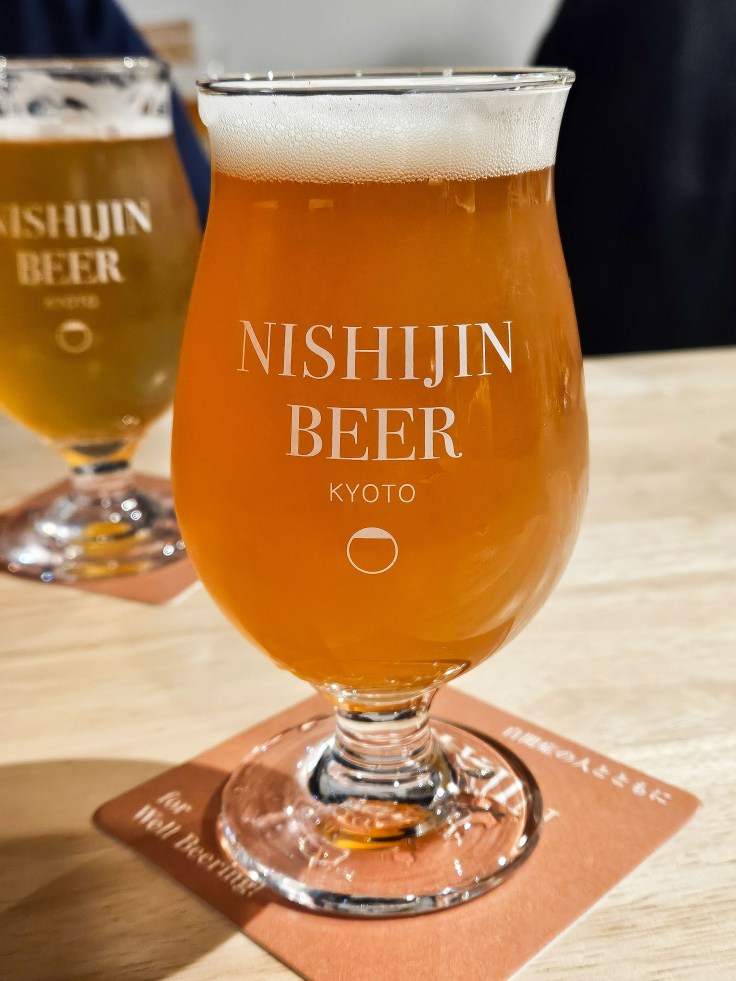
Upon arriving at Nishijin Beer we are greeted warmly and in English. It’s a small taproom just off the main east-west road (Imadigawa-dori) that cuts through Nishijin. There are five beers on tap, including a saison, a weizen, and beers featuring yuzu (an IPA), lemon (a white beer), and ginger. I’m starting to think that brewing a wheat beer might be an unwritten requirement of getting a brewing license in Kyoto. There is minimal seating here, only one table in the back has chairs, and it is currently occupied. Most patrons enjoy their beers in a small room with a series of narrow standing tables. Considering the amount of walking we’ve done today this elicits a sigh of resignation from my wife. Before we can finish our first beer we are invited to stay for a special community event featuring homemade fish curry. That’s an easy decision, vindicated by a very tasty and entirely unplanned dinner. Of the beers I would say the hefeweizen (Silky Weizen) is the stand out. I later learned that Nishijin Beer is owned and operated by a community non-profit organization (HEROES) and offers employment and skill-building opportunities for people with developmental and autism spectrum disorders. In a country dominated by large industrial breweries it’s refreshing to come across these small-scale breweries that are part of the fabric of the local community.
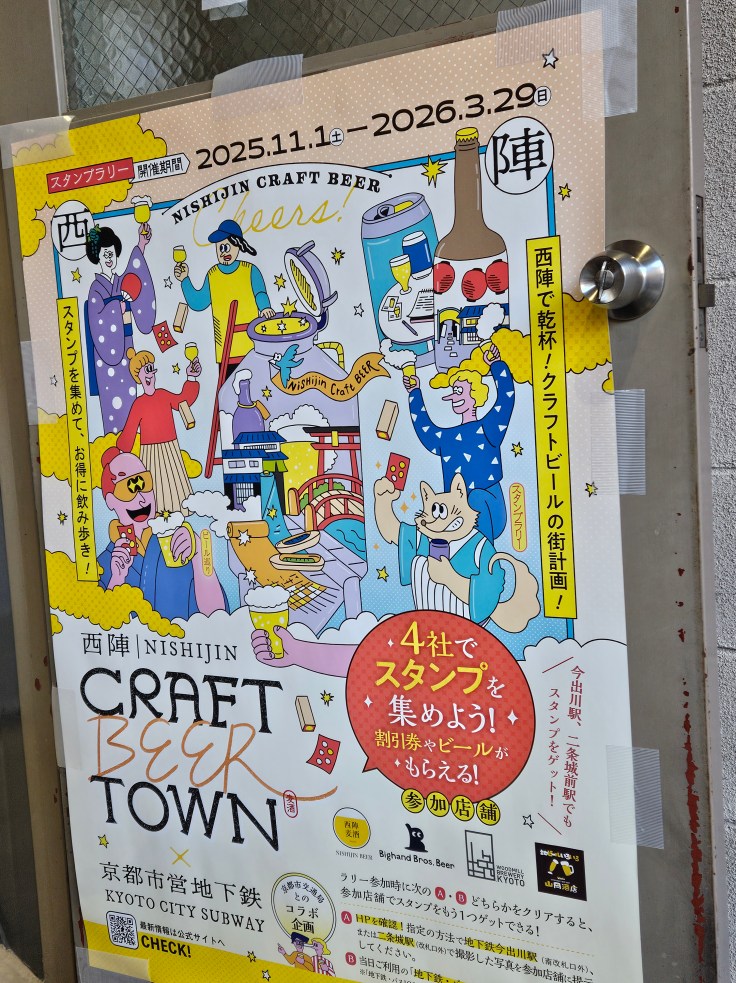

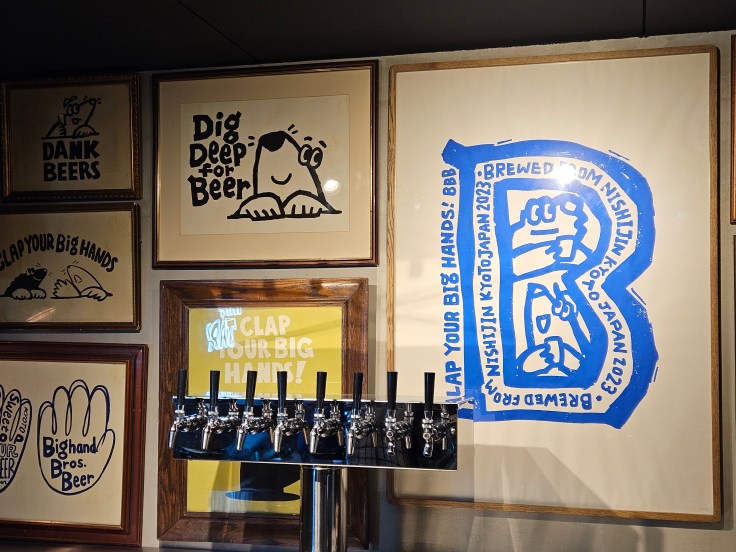
We’ve now completed three stamps, enough for a ¥300 discount on our next beer, but the third and final brewery on the Nishijin Beer Crawl is only 2 blocks away (the fifth stamp is a bottle shop). Although we are battling fatigue, to quit now seems like it would cast a shadow on what has otherwise been a spectacular day. Darkness has descended on the city, but my smart phone has enough battery life to navigate to Bighand Bros Brewing. The brewery is located in the basement of a handsome building on the corner of Chiekoin and Sasayacho streets. A café occupies the ground floor of the building, while the brewery shares the basement with a coffee roaster and a cookie factory. The taproom is located in a corner nook of the basement and is roughly the size of my bedroom. Unlike the first two stops on this journey, Bighand Bros is open five days a week, either from 11:30–7 pm (Sun, Wed, Thur) or 11:30–8 pm (Fri, Sat). The taproom might be small, but that’s not a problem because we are the only customers. The bartender, who doubles as the barista, takes a break from cleaning equipment to pour a couple of beers for us.
There are two aspects of Bighand Bros. that distinguish it from the other breweries in Kyoto. Firstly, the focus seems to primarily on sessionable British ales (no hefeweizens here) and secondly, all of the beers are named after minerals, presumably because the brewery is located underground. They are pouring an English IPA (Anorthite), a dark mild (Chiastolite), a porter (Black Jade), a 3.3% table beer (Microcline), a hazy pale ale (Grossular) and a hazy IPA (Uvarovite). The last two beers a nod to 21st century Britain I suppose. I order the dark mild and my wife the hazy IPA. Quality wise these beers are better than solid, they are stellar.
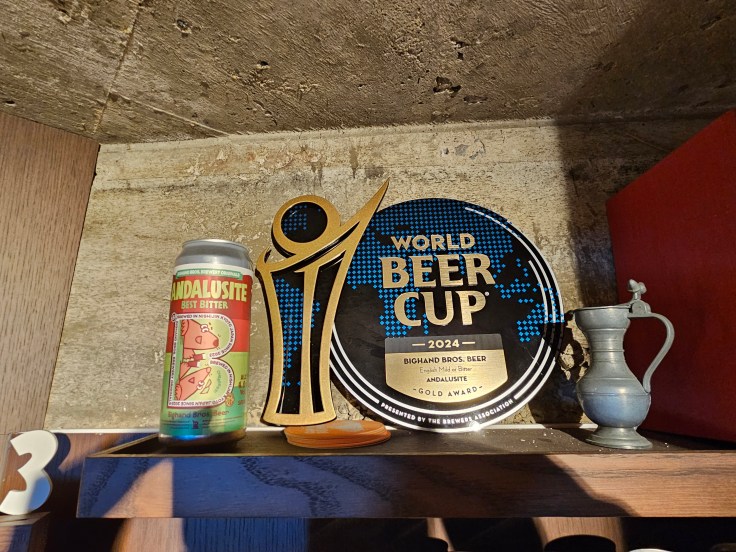
After my eyes adjust to the dim basement lighting, I notice a World Beer Cup plaque collecting dust in the corner. It’s a gold medal in the English Bitter or Mild Category from the 2024 competition for a beer called Andulusite. I ask the bartender about it and he tells us that they won another award at the 2025 World Beer Cup. Not too many breweries can claim WBC medals two years in a row (only five Japanese breweries medaled at both the 2024 and 2025 competitions). He then tells me the medal, a bronze medal, was for the beer I’m drinking, the dark mild Chiastolite. That I ended up drinking a WBC medal-winning beer in a deserted basement at a brewery I’d not heard of when I woke up this morning makes for a pretty good story. It’s a good enough reason to keep this blog going, even if it’s pro bono work.
If your time in Kyoto is limited and you can’t make it out to Nishijin, it’s good to know that Bighand Bros. also has a small taproom in the Teramachi Market, not far from the Sanjo station.


Shimogamo Shrine and Japanese Curry
I understand that the itinerary described above might not be for everyone. If the weather is uncooperative or you simply don’t have time for a mountain hike, a pilgrimage to Mt. Karuma might not be in the cards. As an alternative let me suggest a more compact yet still compelling itinerary.
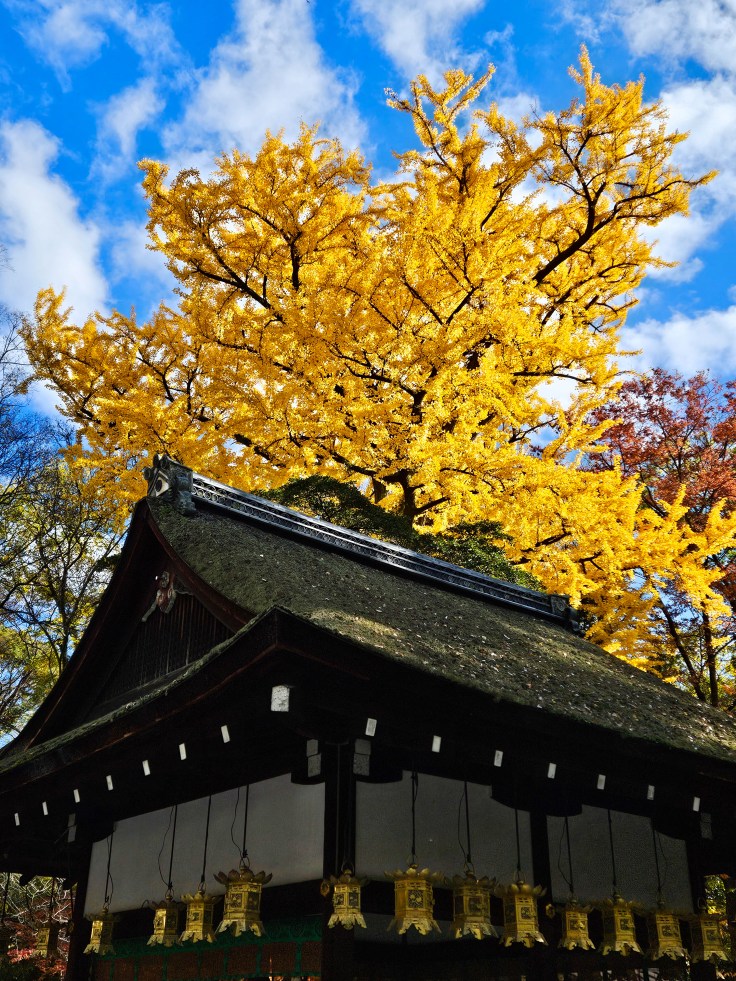
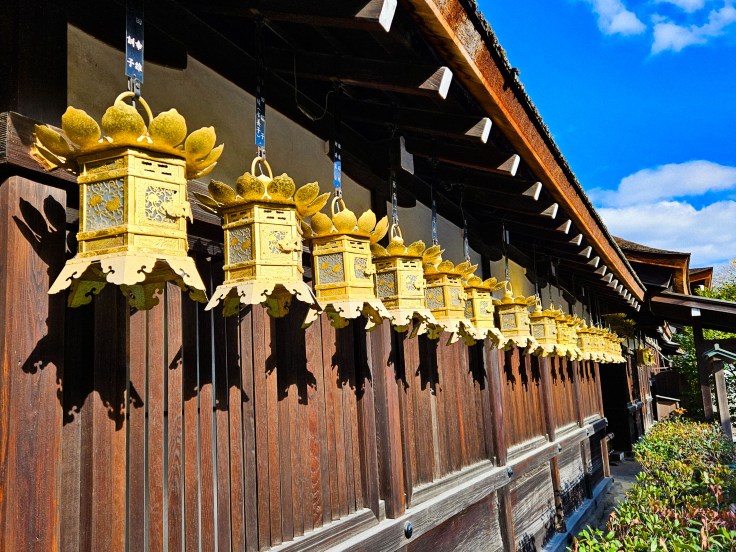
This route also takes us to Demachiyanagi Station, a hub for exploring points of interest in northeast Kyoto. Instead of heading north on the train this time we are going to leave the station and make the short journey to the Shimogamo Shrine on foot. This shrine dates back to the 6th century and is thus older than the city of Kyoto. Located near the confluence of the Kamo and Takano Rivers it is one of 17 Kyoto sites on the UNESCO World Heritage list. The shrine is set in the Tadasu No Mori Forest (The Forest Where Lies are Revealed) which covers an area of 30 acres. This is the last remaining island of old-growth forest in the city. Apparently the forest is left to manage itself without planting or pruning.
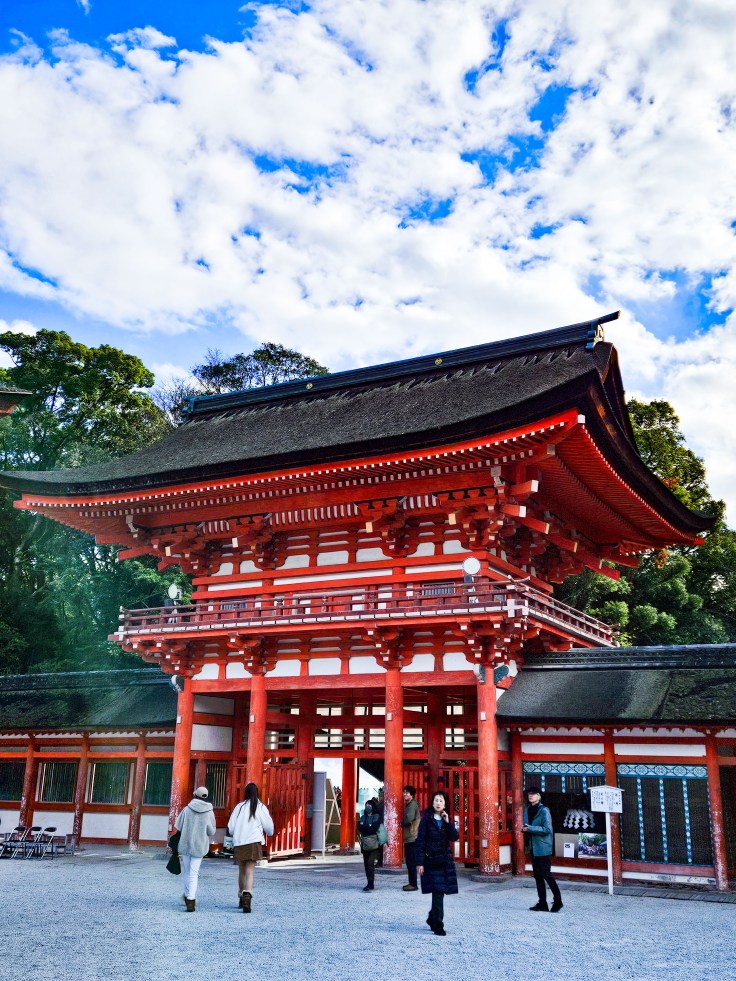
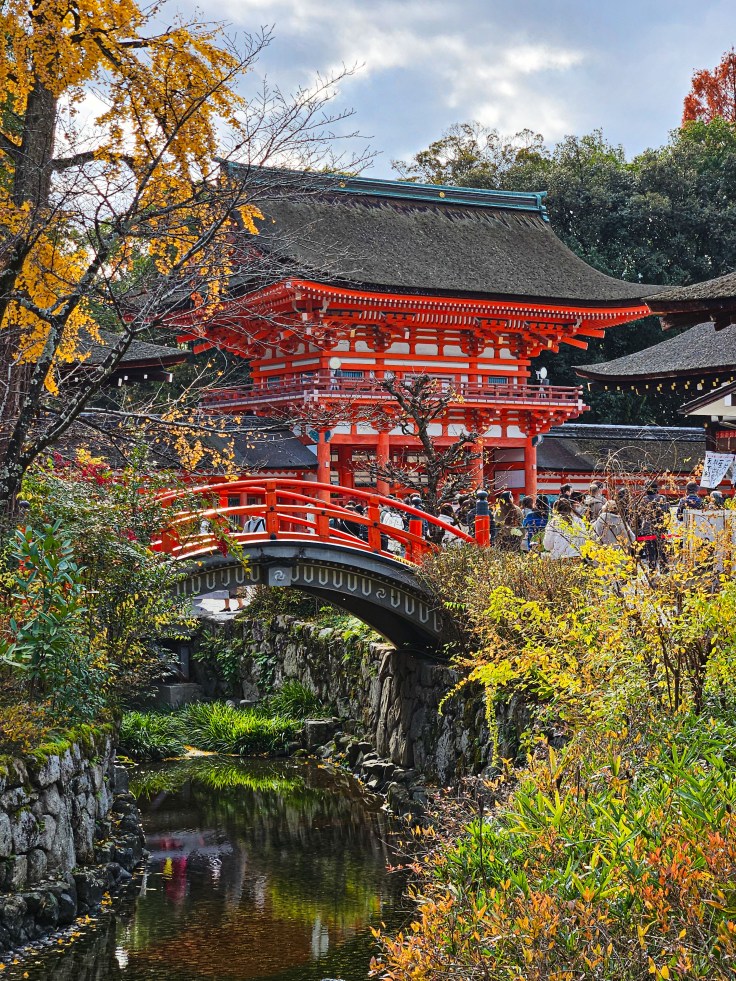
Once you pass through the large torii gate that marks the southern boundary of the forest you walk along a broad tree-lined path. A small stream runs along the west side of the path, joined by a couple of even smaller streams along the way. A cluster of buildings is located close to the southern entrance. They are worth exploring, but don’t stop there. If you keep following the path northward you will eventually come to a majestic two-story wooden entrance gate, painted vermillion and white, that marks the entrance to the main shrine complex. Inside similarly painted buildings surround a central courtyard. The small river we have been following seems to originate here. For a few hundred yen you can get a fortune written in a kind of invisible ink that reveals itself only when floated on top of the water. Unlike Kyoto’s most popular (and most crowded) destinations Shimogamo is peaceful, contemplative and well worth a visit.
After refreshing your spirits at Shimogamo, it’s time for some earthly pleasures. First, we return to the point where the Takano and Kamo rivers meet, making an almost perfect Y on the map. It should be about lunch time by now, so let’s get some food before another drinking session. Since Nishijin is all about small locally owned breweries, let’s keep with that theme and head for a small family-run restaurant. One option is Kamomachi Ramen, a small, traditional counter restaurant that serves Tonkotsu (pork bone) ramen, as well as karaage (Japanese fried chicken) and gyoza (pan-fried dumplings). In many ways it is similar to Mr. Gyoza, which I recommended as the restaurant of choice when visiting Kyoto Brewing Company. This restaurant is located close to Demachinayagi Station and thus makes for a convenient stop.
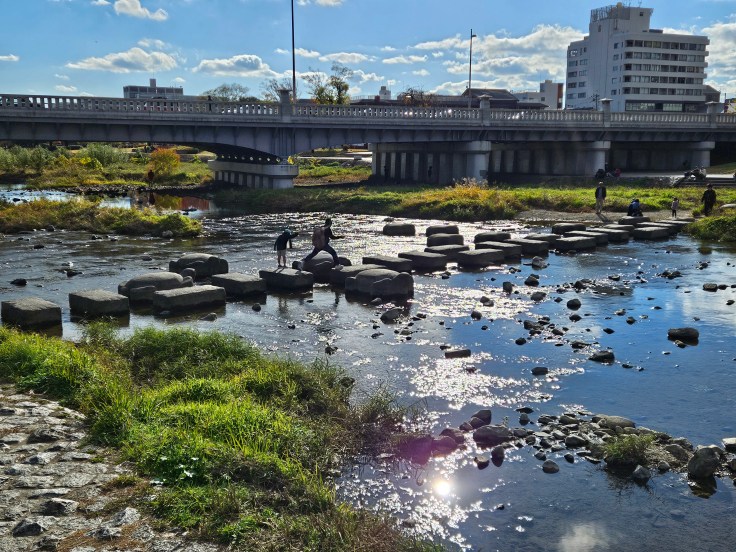
As tempting as a bowl of ramen sounds, for the sake of variety we are going to seek out some Japanese curry. We need to head west toward Nishijin, and while we could walk across the Imadigawa-dori bridge it’s more fun to cross the Kamo River by hopping across a series of large stones that run parallel to the bridge. Once safely on the west side of the river, continue west along Imadigawa-dori street and soon you’ll come across a humble curry restaurant set back somewhat from the street. I’m not sure what the name of the restaurant is, Google Maps lists it as Curry 灯 (あかり). Upon entering you’ll find a single room with seating for about 10 people. The décor is eclectic, with more clocks on the wall than I can easily count. This appears to be another mom and pop operation. Like the Woodmill Brewery, mom manages the front of the restaurant and pop does the cooking. They have an English menu, but ordering here is easy because they only make one dish, wagyu beef curry. So, your only decision is the amount of rice to order and whether you would like to add an extra ingredient. The options include cheese, mango, and pineapple. What they lack in variety they make up for in quality. This style of Japanese curry is not unlike beef stew. The spices are not hot but add a rich complexity. I don’t have the vocabulary to properly describe the curry here, but I can tell you it’s delicious, the best I had in Japan.
Continuing on toward the Nishijin craft breweries on foot gives you the opportunity to stroll through the large park that surrounds the former Imperial Palace. This was the Emperor’s Residence for a millennium until Emperor Meiji moved to Tokyo in 1868. Aside from a few special occasions the public are not allowed inside the buildings here, but the park itself offers yet another peaceful respite from urban surroundings. Continuing westward you should pass near the Nishijin Textile Center. We didn’t have time to visit, but it looks like a good place to learn more about how they craft silk kimonos and obis. The rest of our day was not unlike our first trip to Nishijin, though we were running too late to make a return visit to the Woodmill Brewery. This time Bighand Bros. was doing a brisker business. At one point the number of patrons hit eight people, which is basically elbow-to-elbow inside the closet nook turned taproom. Given the quality of the beer I’m not surprised to see them attracting a crowd.
I’ll end it here, but I wish all three breweries much success in the years ahead. In particular I would not be surprised to see growth and more acclaim for Bighand Bros going forward. Keep an eye out for my third and final post about breweries and temples in Kyoto, focusing on Central Kyoto.
Other Posts in the Japan Beer Travels Series
 Pat's Pints
Leave a comment