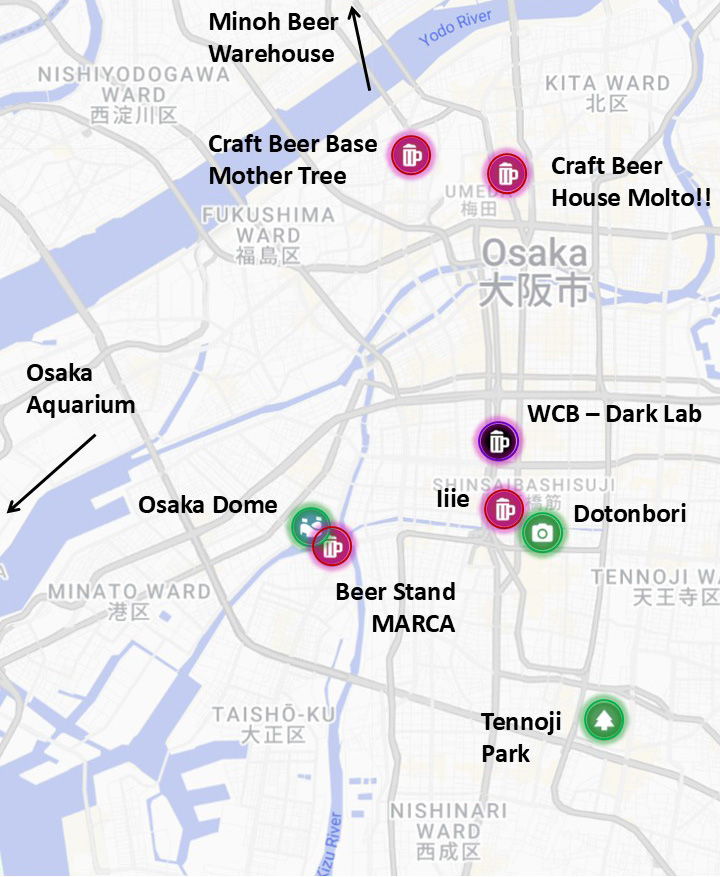
With a population of 2.8 million, Osaka is Japan’s third largest city, behind Tokyo and Yokohama. A visit to Osaka affords you the opportunity to drink craft beer in a former public bath/onsen (Kamigata Beer), in a skyscraper 31 floors above ground level (Craft Beer House Molto!!), on a tugboat (Beer Stand Marca), and myriad other places. Osaka puts on a 3-week Oktoberfest celebration at Tennoji Park in the autumn and a Belgian beer festival at Nakanoshima Park in the spring. I visited the former in late September and was really impressed with the selection of German beers on offer. Given the wealth of options, choosing an itinerary can be daunting to the first-time visitor. To aid in your planning, or if you simply want to experience Japan vicariously, here are some highlights from my recent weekend getaway to Japan’s second city. As with all posts in my Japan series the story that follows is part beer and part travel, so you may want to skip around a little if you’re here just for the beer. Note that the photos at the end of each section are embedded as a slide show. I encourage you to scroll through them to put images to the words.
A big thanks to fellow beer blogger Beer Tengoku who shared some useful tips with me via Reddit. He writes a long running blog on beer in Japan that you can access by clicking here. If you are planning a visit and want to get some local insight it’s full of great content. For those of you (if anyone) faithfully following these posts from Japan and expecting Tokyo Part 2, I hope to come back to that one later.
A Walk in the Woods
We awoke in our apartment in Uji to a gorgeous, mid-November Saturday morning. While living in Japan we are entirely dependent on public transport for getting from place to place. Fortunately, the public transportation system in Japan is amazing. We can get from our apartment to downtown Osaka in 80 minutes (comparable to driving) for a ridiculously low ¥480 (roughly $3 at current exchange rates). There’s a lot to admire in a country that has an affordable, efficient public transportation network and knows how to pour a proper glass of beer. In fact, I’m inclined to say those might be the minimum requirements to qualify as a civilized society.
Given the lovely weather we start the day with something atypical for a visit to Osaka, a hike through a forested mountain trail to a waterfall. To do so we take the Midosuji subway line from Yodoyabashi Station to its northernmost stop at Minoh-kayano Station, a 30 minute journey. We store our luggage in a locker inside the adjacent shopping mall and jump on a bus that drops us off near the wooded foothills that mark the northern boundary of metropolitan Osaka. There’s more than one way to get here, so consult Google Maps and make the call that works best for your situation.
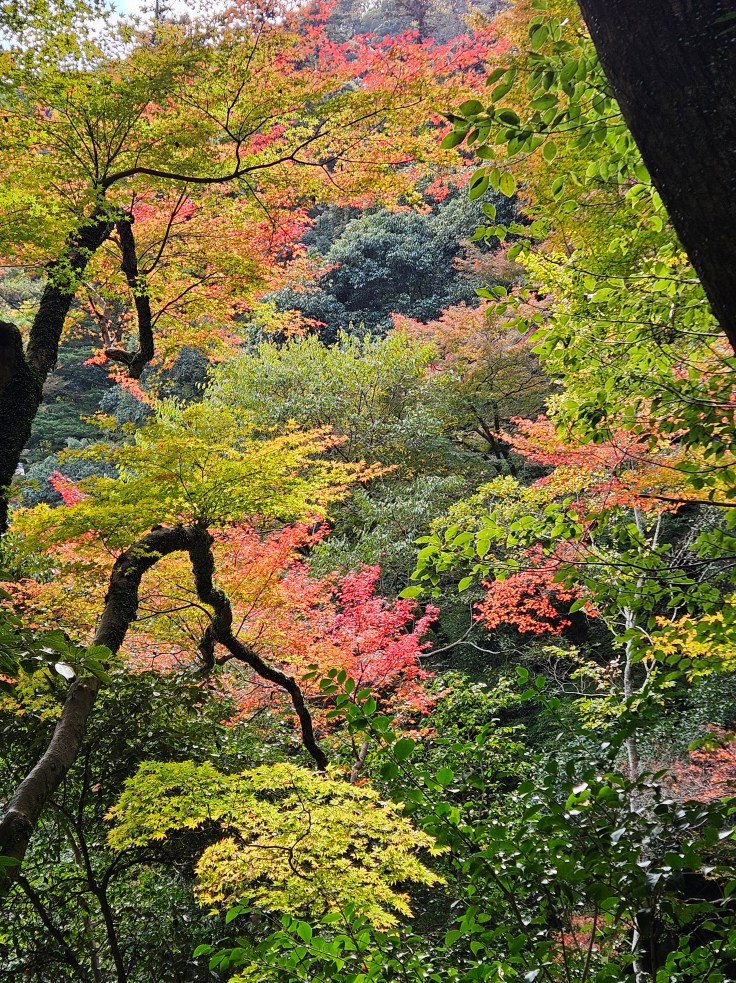
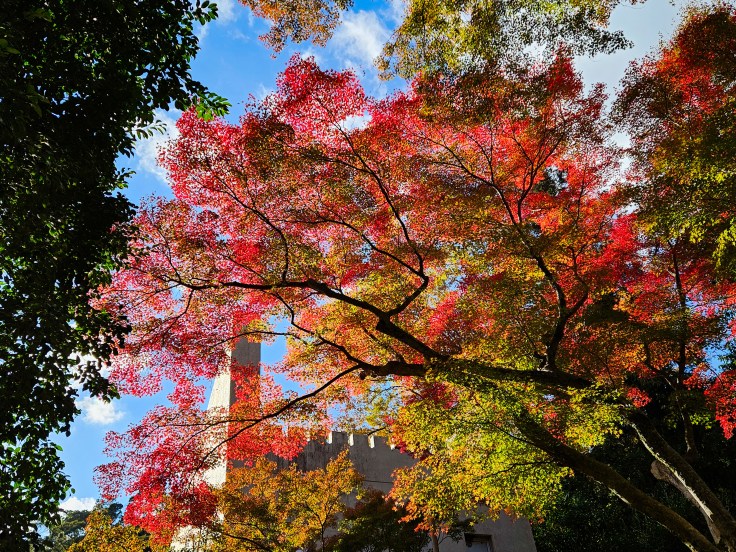
The 3 km hike up to Minoh Falls does not disappoint. The sun is shining, the temperature is hovering around 70 °F, and the forest that surrounds the trail is treating us to a full display of autumn color, from golden ginkgos to scarlet maples. The trees haven’t quite reached the peak of autumn color, but it’s not far off. Given the favorable weather and the Japanese love of fall foliage, thousands of other people have decided to spend their Saturday with us. It’s a wide trail with many branches and things to see along the way, so other than at the waterfall itself the crowds are not too off-putting. I’m sure it’s a different experience on a quiet day, but if you are looking for peace and quiet Osaka might not be your ideal weekend getaway.
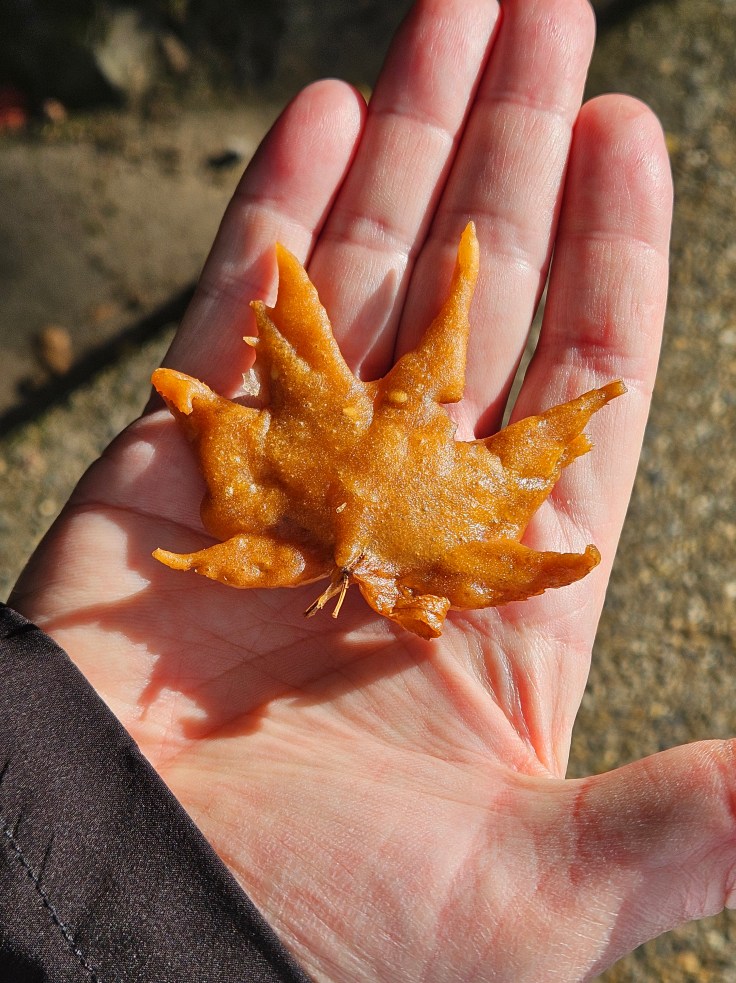
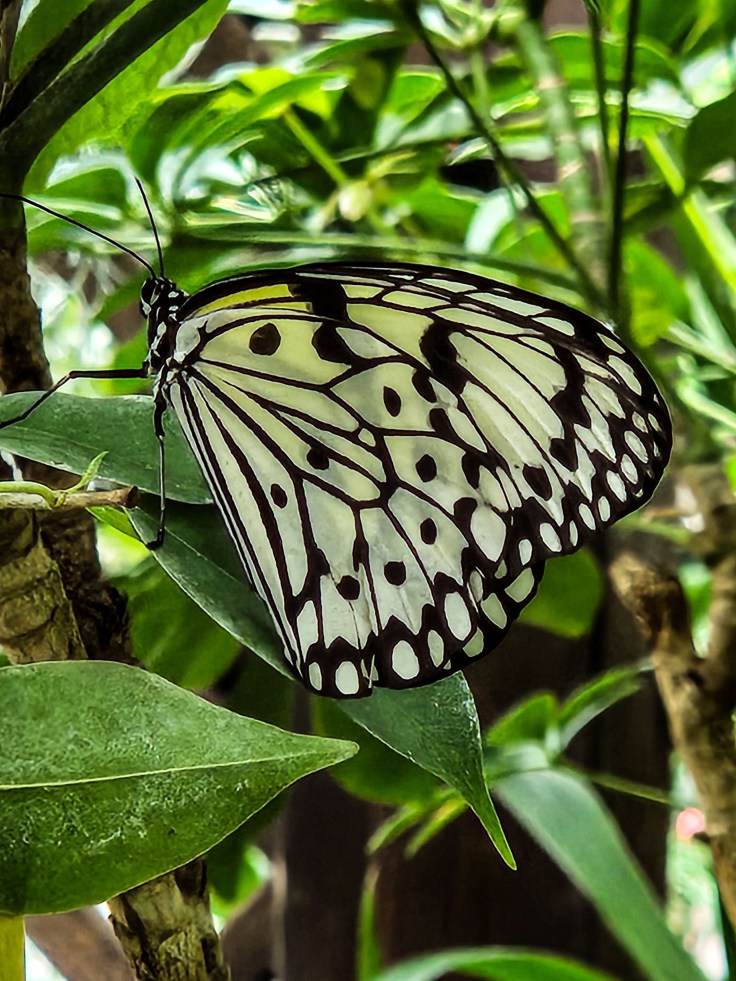
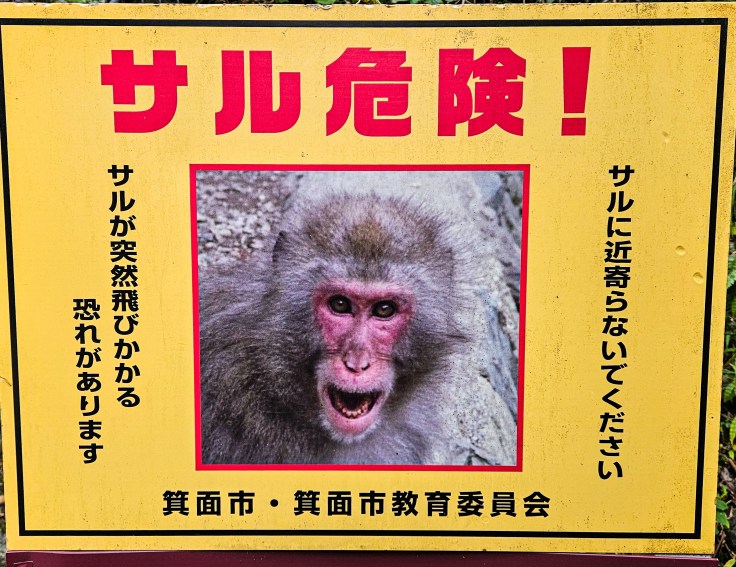
As far as waterfalls go, Minoh Falls is decent, but it’s the things you see along the way that make the hike worthwhile. The trail goes by a picturesque Bhuddist temple (Ryuan-ji). For a small fee you can visit an insectarium, which is worth it for the butterfly exhibit alone. The park is known for monkeys and there are many signs warning you not to feed, approach, or trust the monkeys. Monkey mischief or monkey sightings of any kind were avoided during our hike. One of the most interesting diversions is a chance to eat deep fried maple leaves. This seems like taking seasonality a bit too far, but I have to say it makes for a surprisingly tasty treat. There’s not a lot to it beyond the deep-fried batter, but they have a pleasant crispy, crunchy texture and just the right level of sweetness.
Visiting One of Japan’s OG Craft Breweries
Once we get back to the city we start walking toward the Minoh Beer Warehouse. About 20 minutes later we arrive at the brewery, which is located on a residential street in the upscale suburb of Minoh. It’s large for a Japanese craft brewery but somewhat undersized as far as warehouses go. The brewery was founded in 1996 by Masaji Oshita, which makes it one of Japan’s oldest craft breweries. Upon launching the business Masaji appointed his eldest daughter, Kaori, still a college student at the time, as the head brewer. This made her one of the first, if not the very first female brewer in Japan. Her father has since passed away so the business is now run by Kaori and her two sisters. Like many Asian countries, business is still largely a male-dominated enterprise in Japan, so it’s refreshing to visit a family-owned brewery run by three women.
Minoh Beer is not just a feel-good story. Over the years they’ve won numerous awards at international beer competitions, including two medals at the 2025 World Beer Cup – a gold for their stout in the Irish-style Dry Stout category and a bronze for their pilsner in the Bohemian-style Pilsner category. The pilsner also earned a bronze at the 2024 WBC and the stout a gold at the 2016 competition. Both beers are in the standard everyday lineup, which makes choosing a beer at Minoh an easy call (unless you are just here for one beer, but that would be silly).
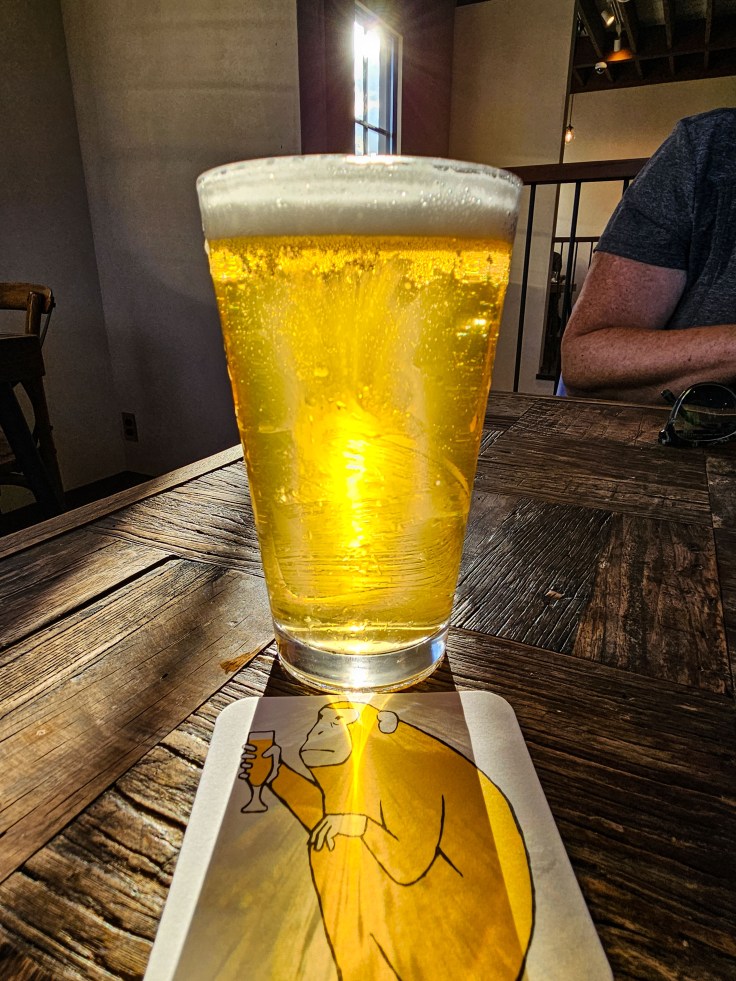
The warehouse features a rather large taproom spread out over two levels. The layout is open and downright spacious by Japanese standards. The tables and chairs are made from handsome wood that complements the exposed beams. On both levels the windows let in a lot of ambient light, or at least they do on a sunny afternoon like today. A pint of their award-winning pilsner is just the thing to slake the thirst I’ve built up from several hours walking. The beer is crystal clear and pale yellow in color, topped with a soft creamy head. It drinks crisp and clean with the distinctive bite of pilsner malt. The bitterness is enough to balance the malt sweetness but otherwise tucked away in the background. The “soft” bitterness suggests the brewing water here is soft, not unlike it is in Pilsen. It’s a textbook execution of European pilsner, which would explain two WBC medals. My wife seems happy with the Weizen, which she later tells me was her favorite beer of the weekend.
The pilsner goes down quickly, after all it is my first beer of the day. There’s still a lot of ground to cover, but before leaving a glass of Minoh Stout is mandatory. Once again and not surprisingly the beer is spot-on for the style. It’s served with a pillowy tan head atop a glass of deep black beer. The flavor is dominated by chocolate and coffee flavors from the dark roasted malts. The finish is clean with very little lingering sweetness, as you might expect for an Irish-dry stout, though at 5.5% it’s stronger than average for the style. It’s a classic, but in my humble opinion it would be even better if poured on nitro.


A Basement Craft Beer Bar, Osaka Street Food, and an IPA House
After leaving Minoh Beer Warehouse we make our way back to Minoh-kayano station (on foot, which was not wise, we should have taken the bus), retrieve our bags, and take the Midosuji line to the bustling Umeda station in downtown Osaka. If there is a part of Osaka that’s not bustling I have yet to find it. After checking into our hotel, we return to the station and get back on a Midosuji line train headed for Shinsaibashi. Our first stop is a basement bar called Iiie. If you asked a craft beer nerd to sit down and design a bar, it would probably end up looking a lot like Iiie. There are about 20 beers on tap, split evenly between Japanese craft beers and imports. There’s also an extensive selection of packaged beer in coolers that you can peruse, either to drink in house or take home. The website says there are 300 different beers to choose from. I did not attempt to count them but that seems like a reasonable estimate.
We arrive just before 6 pm on a Saturday evening. The menu is a mix of English and Japanese and the bar is fairly busy. Not a great time for asking the bartender a lot of questions in a foreign language. It’s one of those occasions where you make an educated guess of what you are ordering and hope for the best. I order an Italian Pilsner from a Japanese brewery that was either South Horizon or something that starts with an M, and a hazy IPA called Dead Flowers from the import side of the menu for my wife. The latter turns out to be a New Zealand IPA from Foam Brewers in Burlington, Vermont. They are a darling of the New England IPA scene and to be honest I’m surprised you can get one of their beers on tap in Osaka. Both beers are good, particularly the Foam beer, so chalk one up for proceeding with confidence even if you don’t know what you are doing. (Click here for a story about a trip I took to Vermont some years ago to visit Foam, Hill Farmstead, The Alchemist and other places).
After we get settled into our seats I see there are quite a few pieces of art on the wall and a couple of turntables are set up in the back, suggesting the occasional DJ. Many of the patrons seem to be dressed different than your average craft beer nerd. One woman is dressed as a fox, complete with a large bushy tail. Another person looks to be dressed as character out of the novel Dune. I can’t tell if we are at a costume party, the opening of an art exhibit, or something else. Sadly, we didn’t stick around long enough to find out. Compared to Minoh Beer, where the pours were on the order of ¥600 for a regular pour and ¥1000 for a pint, the beers here are more expensive (¥2600 or $17 for two regular pours), but then again one of the beers did come from the other side of the world.
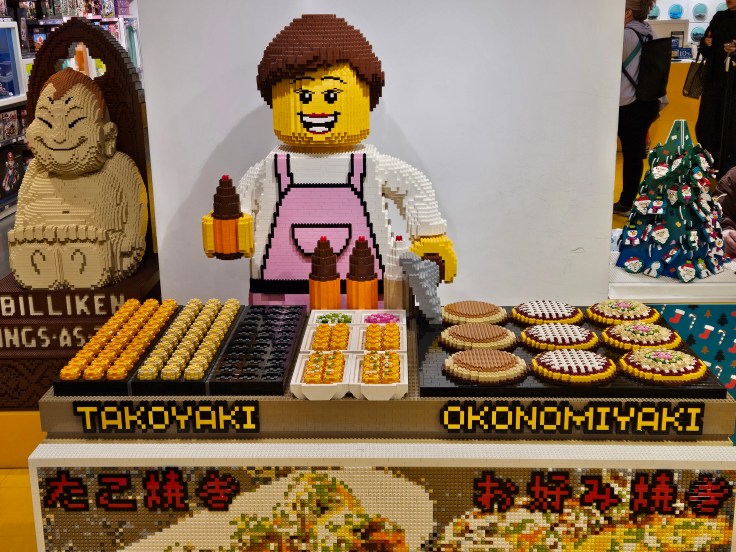
I thought we might get some food at Iiie, but when we arrived the kitchen wasn’t yet open. By this time the cucumber on a stick and fried maple leaves from our afternoon hike are a long distant memory, so finding some food is the next order of business. Osaka is famous for its street food. Arguably the two best known Osaka confections are okonomiyaki (a savory “pancake/omelet” made with cabbage, eggs, flour and various savory ingredients) and Takoyaki (bite-sized balls of batter filled with diced octopus, green onion, and pickled ginger). So, I look up an okonomiyaki place that is rated 4.9 on Google Maps and after a few minutes walking we arrive. Unfortunately, we encounter two staples of Japanese life – queuing in line and reserving a table ahead of time. We did the former for about 15 minutes, but not the latter, so in the end our bid for a table is denied. The backup plan is a restaurant across the street that is frying up Takoyaki balls right out on the street. They are happy to seat us as long as we obey three simple rules – pay in cash, leave within one hour of being seated, and refrain from taking any photos.
For only marginally more than we paid for two craft beers at our last stop we order six Takoyaki balls, and a trifecta of izakaya fare—gyozas (pan fried pork-filled dumplings), karaage (Japanese fried chicken), and yakisoba (stir fried soba noodles coated in a tangy brown sauce)—accompanied by two mugs of Asahi Super Dry. It’s as though we are trying to undo all the health benefits of the Japanese diet in one meal. It’s not like octopus has ever been a staple of my diet, but I’ve been avoiding octopus dishes since watching “My Octopus Teacher” and realizing what intelligent creatures they are. Living in the midwestern US that’s a challenge similar to cutting caviar or depleted uranium out of your diet, but since coming to Kansai it takes a little more effort. For the sake of this blog, I’ve suspended this practice for one night so I can try Takoyaki. The good news is that I will have no problem going back on the no-cephalopod diet. First off, freshly cooked Takoyaki tends to be very hot and does not cool quickly. After 5 minutes of waiting for it to cool I’ve exhausted my patience. The inside temperature has dropped below the point where volcanic rocks solidify, but it’s still warm enough to do some damage to the inside of one’s mouth. The flavor is pretty good but if I’m being honest the texture isn’t really to my liking. The inner dough retains a gooey texture that contrasts with the chewy octopus in the middle. Despite my misgivings, Takoyaki is beloved by residents and visitors alike, so don’t let me talk you out of trying it.
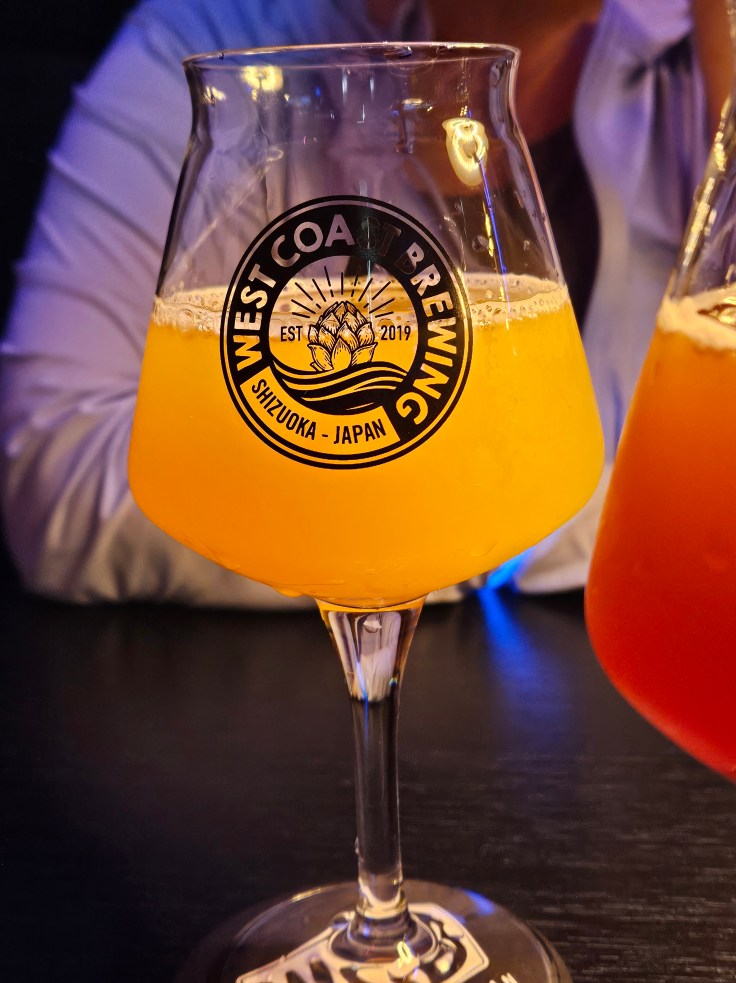
The 23,000+ steps we’ve walked today are starting to catch up with us, no doubt exacerbated by the act of digesting a belly full of fried foods, but we’ve got enough energy for one more stop. Our final destination for the day is a tap room operated by West Coast Brewing. This brewery was founded in 2019 by former Seattle resident Derek Baston. It’s based out of Shizuoka, which is somewhat ironically located on the east coast of Japan, southeast of Mt. Fuji. The taproom is called WCB – Dark Lab, and true to its name the upholstery is black and the room is lit by purple neon lights, accented by soft white lights located underneath the bar. It makes for a sleek look. The prices here are similar to what we encountered in Iiie.
A couple of posts back, I pointed out that Japanese breweries tend not to specialize in one particular style, but that generalization does not apply to West Coast Brewing. This is an IPA-first brewery and makes no apologies about it. Most of the 15 beers on the taplist are different varieties of IPAs, except for two imperial stouts both topping 12% abv. WCB did take home a gold medal in the Dessert/Pastry Stout category at the 2025 World Beer Cup for a beer called The Gateway. That beer is not on the tap list and a 13% beer might just put me to sleep anyway, so I order a Red IPA for myself and a Hazy IPA for my wife. We strike up a brief conversation with three Japanese patrons sitting at the table next to us, a fairly uncommon occurrence given the language barrier. Our new friends tell us that this brewery makes IPAs like they are supposed to taste, like they would taste in America. I would tend to agree. Since we are in a part of Osaka called American Village, the taplist seems appropriate. If you are visiting from abroad and have a nostalgic hankering for some American-style IPAs look no further than West Coast Brewing.


Craft Beer Base and the Umeda Sky Building
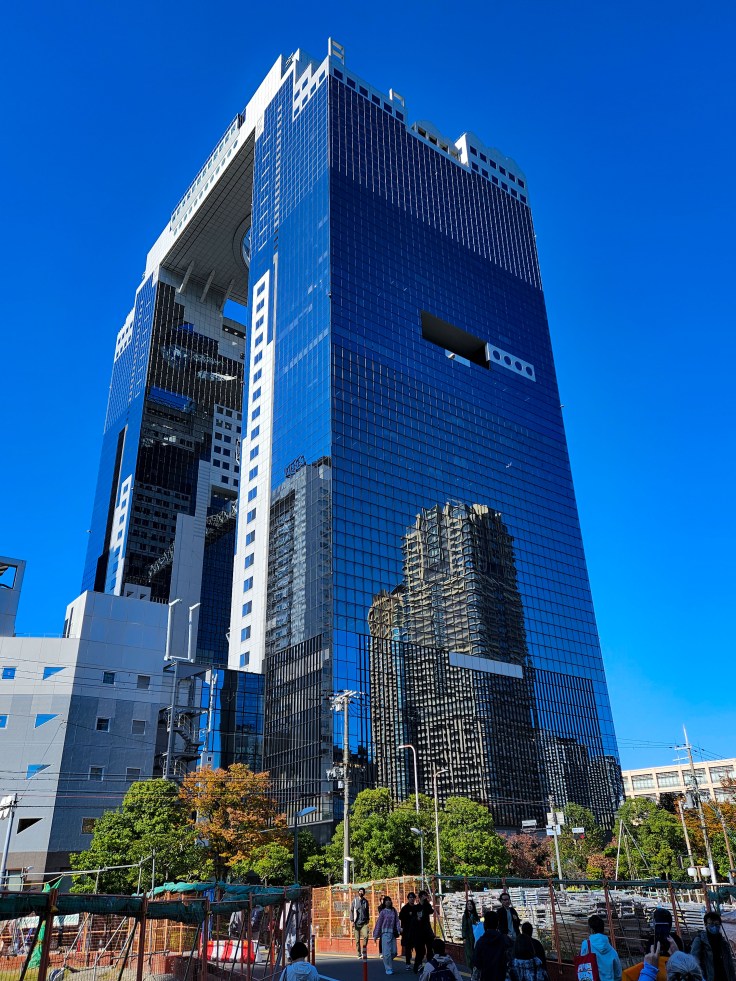
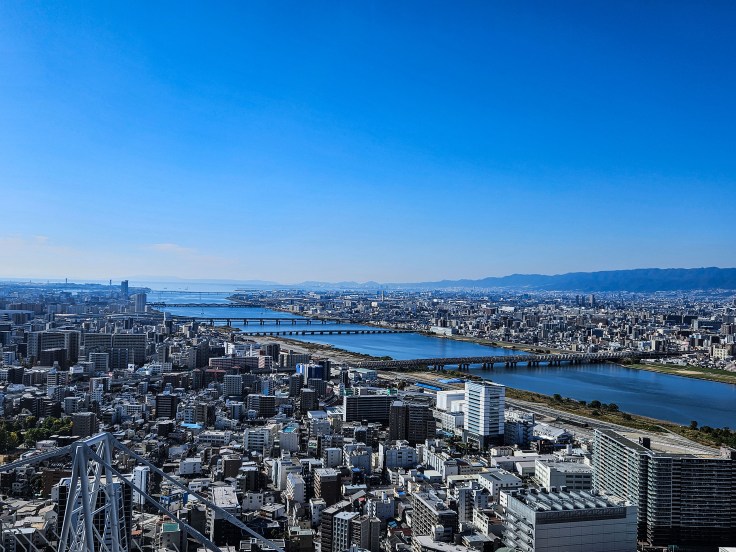
On Sunday morning we check out of our hotel and set out to see more of Osaka. Most places don’t open until 10 or 11 am so after breakfast we meander around Umeda for a while. Eventually we head over to the Umeda Sky Building, a distinctive building consisting of two 40 story towers connected by an observatory at the top. We are surprised to find the plaza at the base of the USB filled with something approximating a German Christmas market, complete with a huge artificial Christmas tree and booths serving mulled wine. In the US people are sort of compelled to wait until after Thanksgiving for such displays, but the lack of Thanksgiving in Japan makes for no barrier to seasonal creep. Not that Christmas is a Japanese tradition anyway, but in Japan shopping is always in season. If you’ve got ¥2000 to spare and don’t mind waiting in line for 15-20 minutes, the floating garden atop the Umeda Sky Building does offer expansive views of the city in all directions. The urban landscape fills all the space from the mountains where we hiked yesterday to the Seto Inland Sea.
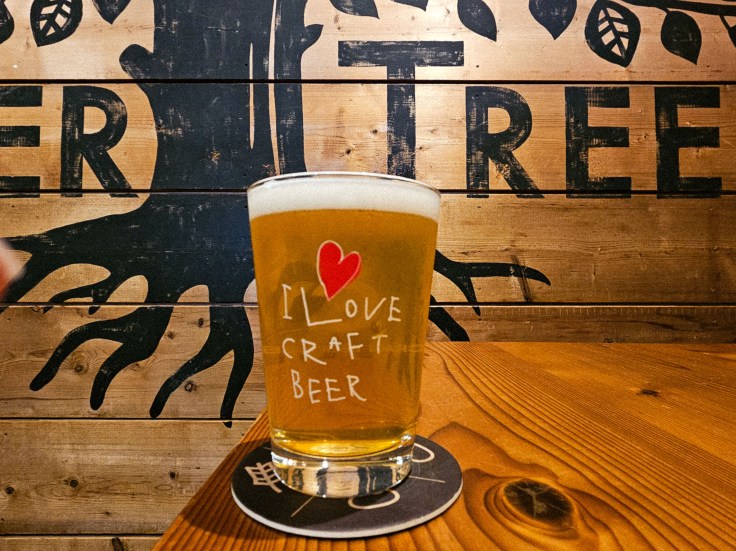
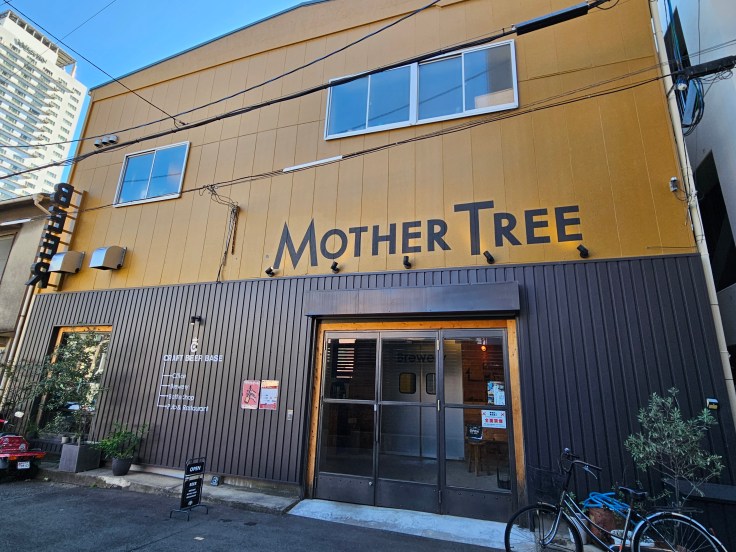
After leaving the Umeda Sky Building it’s a short walk to our first true destination of the day – Craft Beer Base Mother Tree (CBBMT for short). Craft Beer Base was launched in 2012 in Umeda as a humble bottle shop and tasting room. They have since expanded into a variety of locations, each named after various parts of a tree (branch, leaf, bud). They started brewing their own beer in 2018 and opened the Mother Tree location in 2019. CBBMT houses the brewery and serves as a taproom, bottle shop, and restaurant. The décor is almost industrial, but in a stylish Japanese way. The food menu is a good representation of what you would find in a German beer hall – jägerschnitzel, schweinebraten (roast pork), currywurst, obatza, and on the weekends, weisswurst. If you have an aversion to Central European cuisine, they also serve pizza. The timing of our visit happened to fall around lunchtime, so we did partake in the food. The schweinebraten was excellent, so if you are in the mood for some good German fare CBBMT is a good option for lunch or dinner.
Beer-wise I decide to stick with recent World Beer Cup medalists (and why wouldn’t you), by ordering a glass of beer called Lavender and Chamomile. This beer received a bronze medal in the Herb and Spice Beer Category in 2025. Lavender gives the beer a distinct but not overwhelming floral nose. The mouthfeel is almost creamy, befitting the delicate herbal additions. The chamomile adds a touch of perceived sweetness that works well with the golden malt base. I’m really impressed with the quality of beer in Osaka.
Beer Stand Marca and Other Diversions
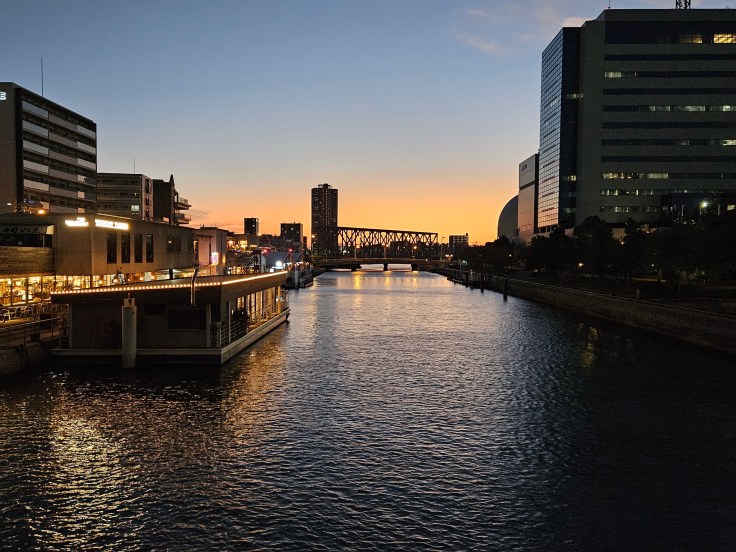
Osaka is a port city, and in my experience port cities tend to be interesting places. Maybe that’s why the beer culture in Osaka seems ahead of the curve compared to many parts in Japan. To facilitate the flow of goods throughout the city, an extensive canal network has been built up over the centuries. I’ve even heard Osaka called the Venice of the East, and while boat tours on Osaka’s canals are a thing, don’t expect to brewery hop on a gondola. If you find that news disappointing, perhaps you will be consoled to learn that our last beer stop of this tour is on a tugboat anchored in the Shirinashi River canal.
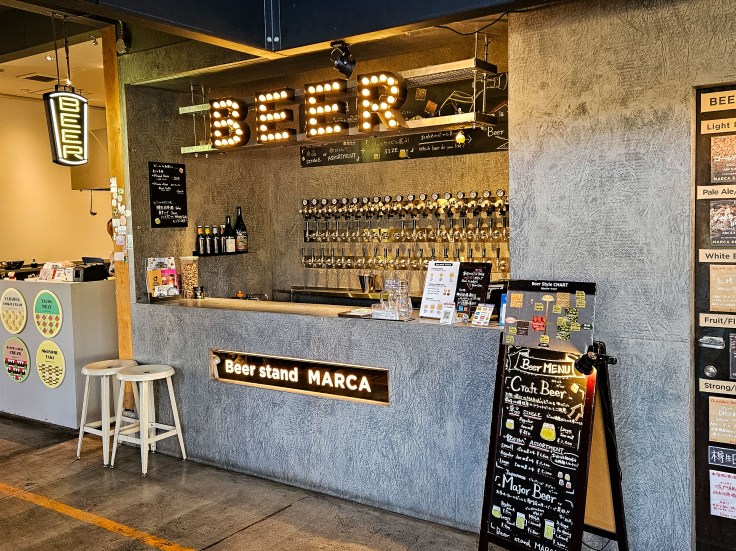
The tugboat in question, Tugboat Taisho, is a floating entertainment complex that is home to a variety of restaurants, bars, and izakayas. Nestled amongst the 15 or so shops on the boat is Beer Stand Marca, a counter where you can walk up and get a craft beer to enjoy on the open air deck of the tugboat. Of the dozen beers on tap only four are made by Marca Brewing, with guest taps from all over Japan filling out the beer list. It’s a good opportunity to sample beers from further afield, and that’s exactly what we do by ordering Space Solitude QDH DIPA from UCHU Brewing and Wabi Sabi Japan Pale Ale from Baird Brewing.
I’ve heard a little about UCHU Brewing but not previously come across one of their beers. They were established in 2018 and are located in Yamanashi Prefecture, on the east side of Mount Fuji. The internet tells me they are known for Hazy/NE style IPAs and took home a gold medal in the super-competitive hazy or juicy IPA category from the 2025 World Beer Cup (for a beer called Relax). I assume that QDH stands for “quadruple dry hopped” and this 8.5% DIPA certainly looks and smells the part. In truth I rarely seek out hazy DIPAs, but this is a good one.
Baird Brewing was founded in 2000 by American ex-pat Bryan Baird (from Ohio no less) and his Japanese wife Sayuri. Based near Shizuoka, they operate a dozen or so pubs in Japan. I’ve previously visited the Harajuku (Tokyo) and Yokohama locations. From those visits I learned that they initially focused on cask ale. I can imagine that might be a hard sell in the hot Japanese summer, but that explains why the styles of beer lean somewhat toward British styles, while the branding and in some cases the ingredients themselves have a distinctly Japanese flair. That’s definitely the case with Wabi Sabi, a pale ale infused with wasabi and green tea. You might think wasabi is a strange thing to add to a beer and you wouldn’t be wrong. The wasabi taste is subtle, but it does add some spiciness that comes across not unlike phenols. Initially it struck me as a wee bit harsh, but by mid-beer it was tasting more like a saison. The green tea is even more subtle, mostly apparent on the nose if at all.
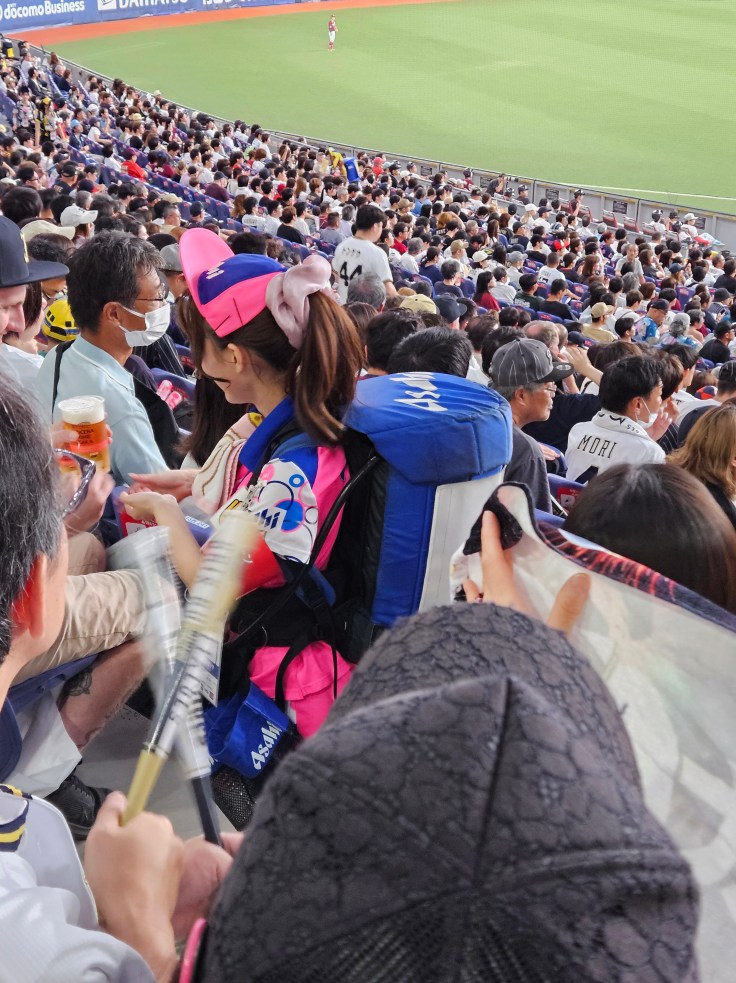
Sitting on the deck of a tugboat enjoying craft beers is an excellent way to enjoy a nice day. It would be a particularly good place to stop if you are on your way to enjoy an Orix Buffaloes baseball game at the nearby Kyocera Osaka Dome, which is exactly what we did six weeks ago. American baseball games are great, but the level of fan involvement at a Japanese baseball game makes for a different experience. Not to mention that petite young women patrol the stands carrying small kegs of beer on their back dispensing freshly poured draft beer to thirsty fans. If you get a chance to take in a Japanese baseball game, I highly recommend it. If baseball is not your thing keep traveling toward the inland sea and you will eventually reach the Osaka Aquarium. We did so on our first trip to Osaka and found it to be impressive. Thrill seekers can head for the Universal Studios theme park, located not far from the aquarium. If anyone tells you there’s nothing to do in Osaka other than eating, drinking, and shopping don’t believe them.

Shopping in Osaka
We had one more stop to make before heading home, picking up a few gifts at the Godzilla Store. This provided an opportunity to visit another Japanese institution – the department store. The Osaka Godzilla Store is located on the sixth floor of the PARCO Building, a 16 story mecca of shopping located in the heart of Shinsaibashi. To an American PARCO is more shopping mall than department store. The two basement floors are filled with restaurants selling everything from ramen to Spanish tapas to Takoyaki to high-end whiskey. There’s a movie theater and what seems to me like an excessive amount of high-end fashion. As if that wasn’t enough retail options concentrated into a single place, once you leave PARCO you may find yourself walking down the Shinsaibashi arcade (officially the Shinsaibashi Suji shopping street). This pedestrian street is covered by a roof and lined with even more shops selling high-end merchandise. It is six football fields long and filled with a multinational throng of people. I recently read a survey that found shopping to be one of the top reasons people visit Japan. Apparently, it is particularly popular for Chinese visitors, so much so that after the recent diplomatic tensions between the two countries, stocks in several Japanese Department stores dropped by over 10%.
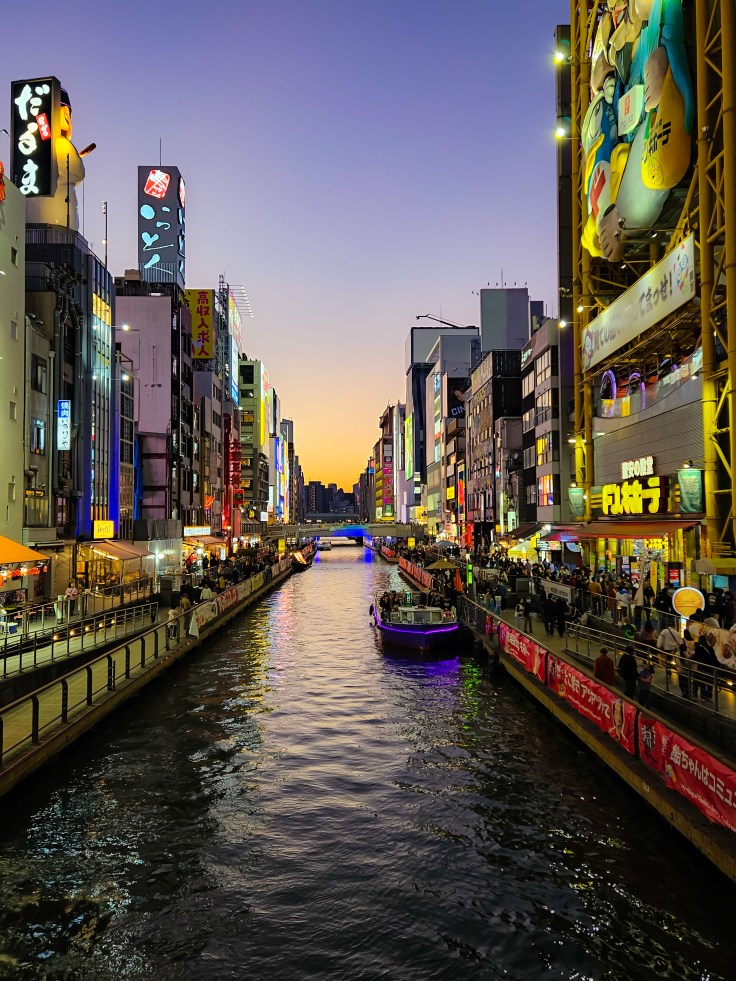
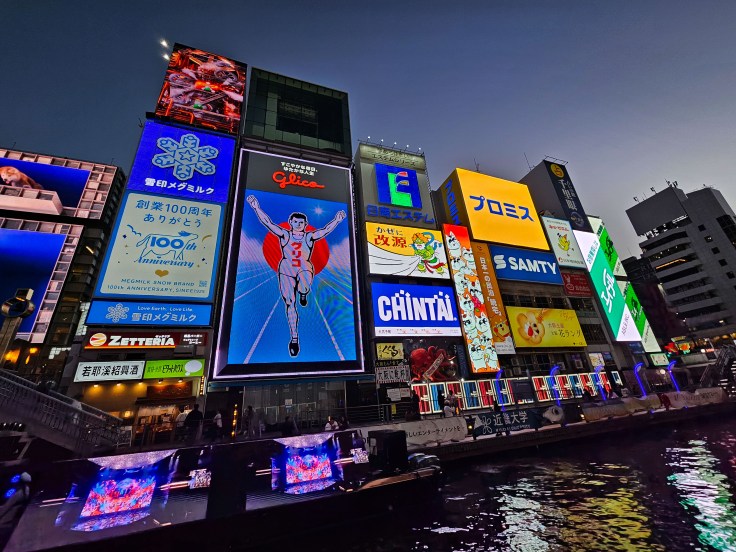
At the southern end of the Shinsaibashi shopping street is another iconic Osaka location, Dotonbori canal. The canal is lined on both sides by tall buildings lit with colorful neon signs (the Glico Running Man which dates to 1935 is the most famous). After surviving the Shinsaibashi Suji shopping street I’m thinking we should have traveled here on a boat directly from Tugboat Taisho. I have no idea how long that would take or how much it would cost, but apparently it is feasible. Our arrival coincides with the sunset and it does make for some pretty pictures. The combination of the canal and all the colorful signs makes for an image that seems distinctively Japanese.
I don’t know if anyone is still reading, but if so I better wrap up. If you skipped to the end of the story, the TLDR version of the tale is that Osaka is easily one of the best cities in Japan for finding great craft beer. Even in this short visit I was able to try multiple beers that have proven themselves to be among the best in the world at international competitions. Beyond beer Osaka has much to offer, if you are anything like me you are more likely to run out of energy (or maybe cash) than to run out of things to do.

Other Posts in the Japan Beer Travels Series
 Pat's Pints
Leave a comment